Ep. 237: Curator Alyssa Velazquez on Craft-itarianism: Community Action Through Craft
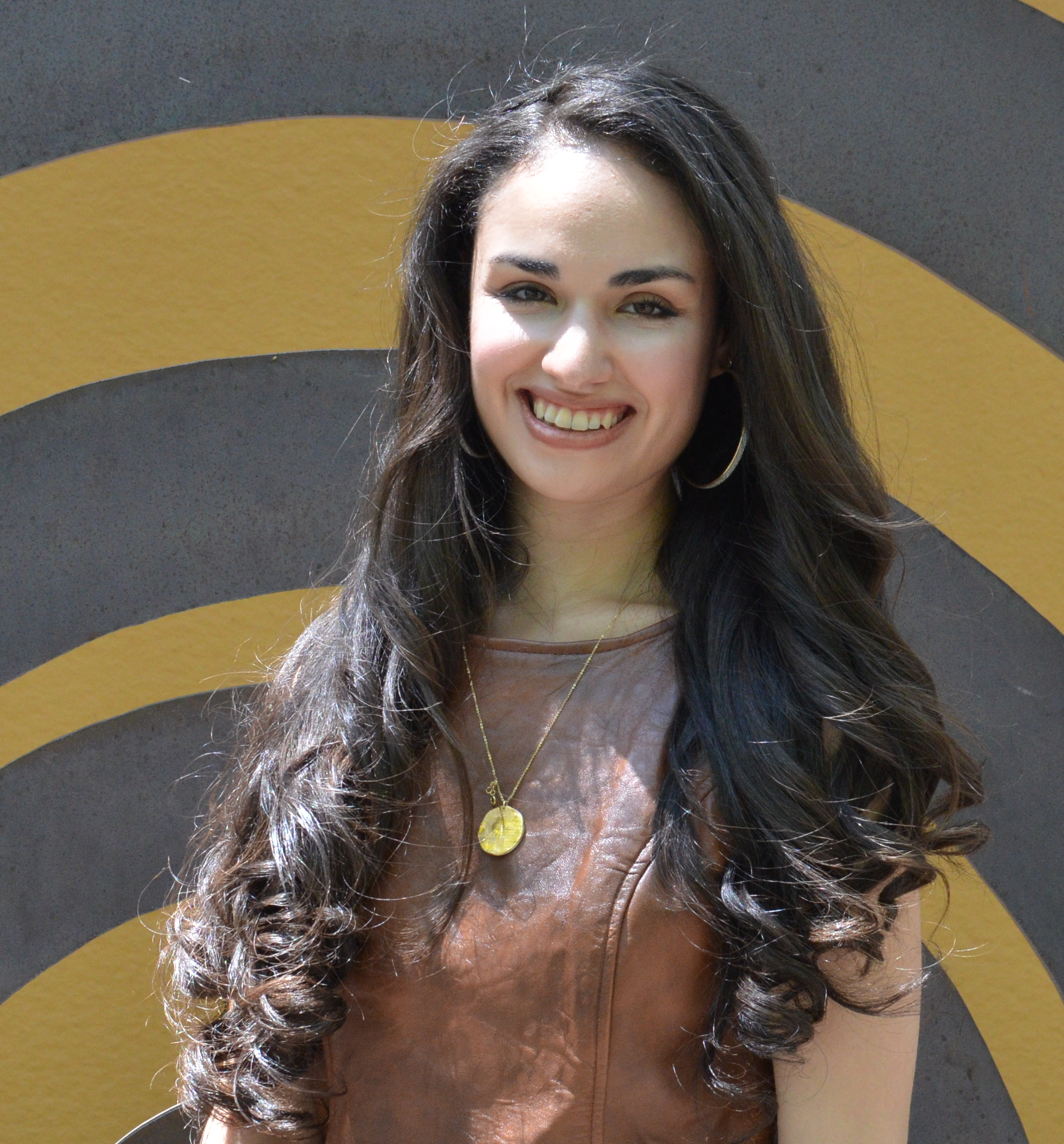
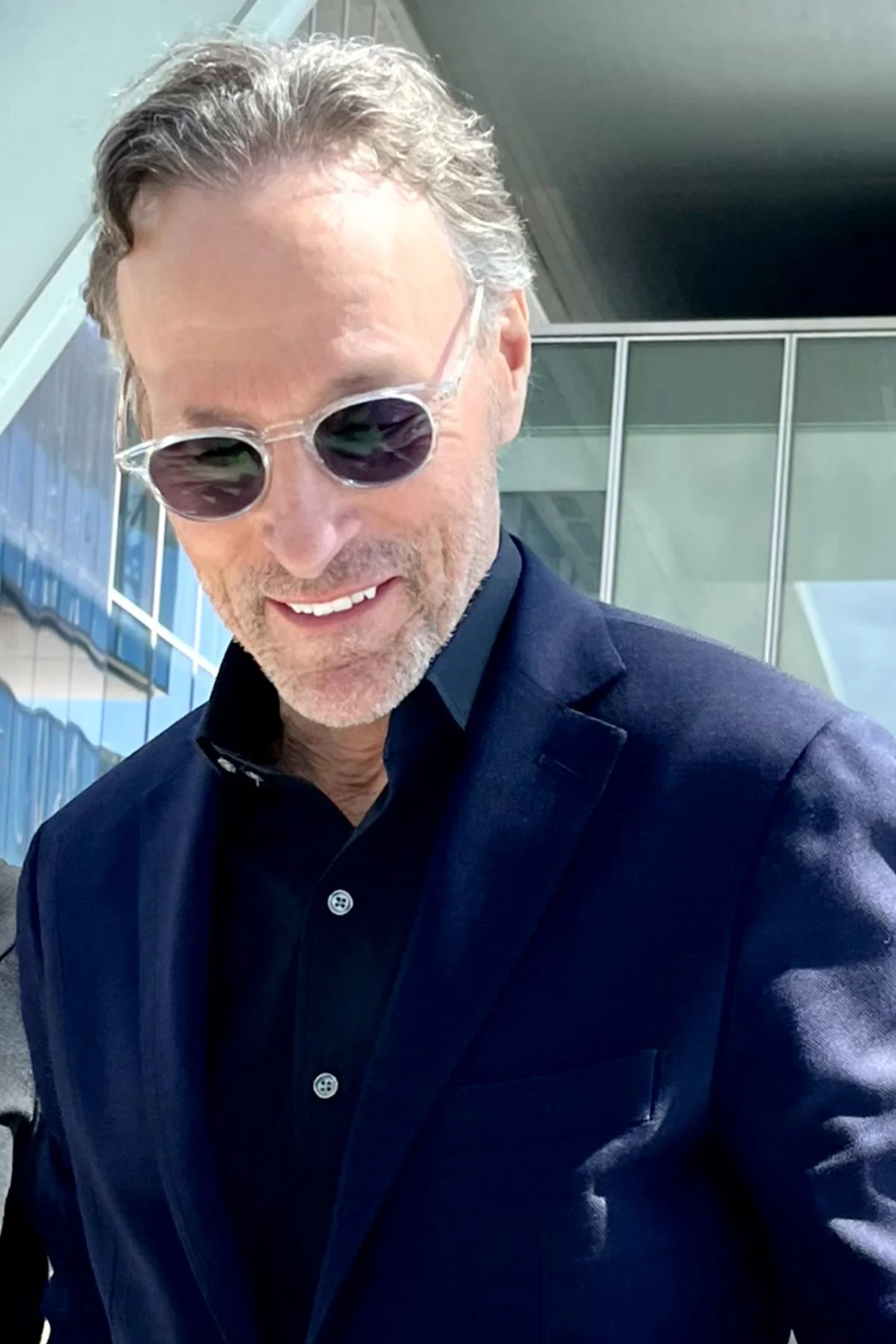
Curator Alyssa Velazquez grew up with theater as her first form of community—a foundation that continues to shape her curatorial work. Her current exhibition at Center for Craft, Craft-itarianism: Community Action Through Craft, explores how craft can add joy, distribute resources, and foster community among at-risk and marginalized people. Velazquez brings a unique interdisciplinary approach to her curatorial practice at Carnegie Museum of Art, pulling from past work in art preservation, acting, and scenic design. Alyssa teaches us that the act of making can form resource generation within communities that need life-affirming support, and that craft methodologies—from job training to art therapy to social enterprise—can be applied to create meaningful social change.
Subscribe to our substack to learn more about Alyssa.
Learn more about Alyssa on her instagram, website, and Linkedin.
Learn more about the Craft-itarianism exhibit and the Center for Craft.
Learn about the artists featured in the exhibition:
AMBOS Project and students at Jardin de las Mariposas, Casa Arcoíris, and Casa Unión Trans in Tijuana, Mexico
Black Craftspeople Digital Archive
Center for Creative Works with Kelly Brown, Cindy Gosselin, and Ania Lattie
Firebird Community Arts with Laura Donefer and Firebird youth artists
People's Pottery Project
Maggie Thompson (Fond du Lac Ojibwe)
Alyssa Velazquez: I think that we have the ability to, in the work that we do, make social change, even just by having someone come through
Amy Devers: Hi everyone, I’m Amy Devers and this is Clever. Today I’m talking to curator Alyssa Velazquez. Alyssa is the Assistant Curator at Carnegie Museum of Art in Pittsburgh and the 2026 Curatorial Fellow at Center for Craft, where she’s developed an exhibition called Craft-itarianism: Community Action Through Craft. Now—this idea of “craft-itarianism” is something she coined to describe work that’s already happening—led by collectives like the AMBOS Project, Firebird Community Arts, People’s Pottery Project, and the Black Craftspeople Digital Archive—who are using craft as a way to build skills, create opportunity, and strengthen community in very real, tangible ways. In other words, this isn’t about craft as decoration or preservation—it’s about craft as action. As infrastructure. As care. And as you’ll hear, Alyssa is passionate about what curatorship can make possible, and is interested in shifting the question from what does art represent? to what can art actually do? Here’s Alyssa…
Alyssa Velazquez: My name is Alyssa Velazquez, I live in Pittsburgh, Pennsylvania, I work as an assistant curator at Carnegie Museum of Art, and I love doing it because I’m obsessed with things.
Amy: You have a current exhibition on view at the Center for Craft called Craft-itarianism: Community Action Through Craft. This is a very, I think, urgent and relevant show. It's very powerful in the assemblage of artists that you've put together, but it's also really provocative in this idea of Craft-itarianism, which is a term that you coined. Talk to me about what Craft-itarianism means.
Alyssa: Thank you for that. I really appreciate you saying that. It's prescient at this moment, because I felt it while curating it, so it's nice that that reads in the experience. And the reason why I generated terminology for what I was seeing, was I felt that it was something that we had come to expect as a facet of craft. I think that many of us have gone to craft fairs, or food festivals, or you've travelled to a local store, and you've seen a pop-up of some sort of object with a placard that gives you a little bit about that institution or that community's history. And oftentimes it has, based in a community that is creating these objects for a form of self-sustaining or empowerment. And so you buy that object, and you feel as if some of your dollars has gone to said community, but that there is infrastructures around that as well. There are spaces, third spaces that are operating both as studio and operating as community center. There are individuals who were a part, and are a part, of said community and saw that their community was being underserved and they turned to craft as a methodology for providing social services to fellow community members.
And I think all of that are actions that happen. They have been happening for decades, but we haven't been able to necessarily call it for what it is. And I saw that as really a shame to not be able to say proudly and firmly that this is actually a form of care that so many individuals are really over time finessing to a level of artistry. And so Craft-itarianism, I felt, was a way to do that, by instead of walking into said food fair, or a local store and saying, ah, I'm picking up this object and it was made by this organization. You can say to another friend, did you know about this non-for-profit in your area that is practicing Craft-itarianism I think it's something that you should get involved in.
Amy: It is helpful. I mean, being able to put language around something, to name something, to be able to distill it so that it can surface in the cultural norms is really powerful and important. And I sense in your exhibition that what you felt was important was surfacing what's already happening and then giving it both the elevated viewpoint from being in a curated exhibition, but also giving it some cultural context, and some cultural language, so that we can keep talking about this, so we can keep recognizing it in our own culture and so that we can actively support it, which I really, really appreciate because so many of the artists in your exhibition are deploying craft at extremely high levels. Like this is not only a means of producing product for economic stability, it's a transfer of heritage and knowledge that frequently comes down through the hands, comes down through oral traditions, is embodied. [0.05.00] And in practicing that embodied tradition, you're also able to kind of work out trauma, or anything that you might be carrying with you, that grief that needs processing. And frequently there's a community aspect to it as well. So these craft systems that you're highlighting are really sort of healing centers of community. And the objects that come from them are also these talismans of hope, and care, and craft excellence, and deep, deep reservoirs of embodied knowledge and material culture. Can you tell me about why you personally felt so urgently motivated to put on this show? Tell me about that whole process.
Alyssa: I think that's also a really great point that you're making me think about relationality within the term itself, which I really tried to think through very intentionally, because in my field, one of the prescient terms around craft was craftivism. And that you could get involved in a social issue, or you could become integrated into a community that believes really strongly about a mission statement, and so craftivism. And I think for Craft-itarianism, there is a sense of methodologies that I believe anyone can look to. You can look to, as you said, social enterprises. You could look at job training, which many of them do. You could look at art therapy, which some of them do as well. And so there's methods of Craft-itarianism that you can apply to your own communities, and in your own life. And at the same time, those organizations, and non-for-profits, and artist spaces might not be built for you. And that's also okay, because there is a sense of also a close knit, or an intentional bonding that can happen through craft if the practice and the community are so closely aligned. I'm thinking of Project FIRE at Firebird Community Arts Center. And Project Fire is their flagship glassblowing program and is specifically for youth who have experienced gun violence in their neighborhoods. So that is a closed community of individuals who are seeking fellow like-minded and lived experienced individuals. And the fact that they chose glassblowing, which is a fire-based craft practice, as part of that therapeutic and peer mentorship journey, it's both the craft informs the ethos of the organization, and the ethos of the organization formulates the community. And I think there is a beautiful ecosystem there and it is both closed as individuals who do not live in Chicago, who have not experienced what these individuals have experienced, would not take part in those glassblowing activities.
However, peer mentorship as a methodology of craft-itarianism is something that we as individuals not part of that at-risk community can take into our own lives as a form of craft helping humanity. And so I think there's that. And so when forming the exhibition, and proposing the exhibition, that's what I thought of being really necessary for this moment, is both recognizing that there are some spaces that are not designed for you. There are some communities that need to self-operate on their own as a form of caretaking for those said individuals. And at the same time, that doesn't mean that you're not involved in the conversation, or you can't take inspiration and guidance from what you see is happening in these communities. And particularly for the Center for Craft, I submitted my application following Hurricane Helene. And so that's at a time when a lot of individuals are thinking about, I might not be in Asheville, but how can I support? And Center for Craft was one of those spaces that was offering abilities to get involved. And there were a lot of emergency grants for creative communities organized by national non-for-profits. So I was witnessing how the act of making can, [0.10.00] at its most basic level, kind of form resource generation shared within communities that are really in need of life-affirming and long-term support.
Amy: Tell me about more of the artists and organizations you chose to include. The Firebirds are such a powerful example of this idea of Craft-itarianism, but all of the other representations in the exhibit are, but in different ways, so I'm really interested to learn more.
Alyssa: I wanted a wide variety of materials and media, that was really important. I also was interested in geographically diverse array of projects from around the country and a sampling of those different methodologies that I kind of already touched on as it relates to the craft practice. Interestingly enough, in my day job at Carnegie Museum of Art, my first project that I curated was Locally Sourced, which was highlighting of contemporary practitioners that I saw in Pittsburgh who were blending craft practices with entrepreneurship. So in some ways, I kind of see this project as a lineage of my interest in looking at contemporary craft and how it's continuing to manifest. And at that time, I was developing the exhibition in 2019, and it opened in the fall of 2020. And we were technically still closed as an institution. And also a lot of maker spaces were technically still closed, and artists were really trying to figure out how to maintain their living through making at a time when so much had changed. And so in some ways, the entrepreneurs that I saw as being both craftspeople were really amping up their social media presence, or really building out their website. And I was also trying to figure out how can I support, in a distant way, outside of this exhibition development. And one of the non-for-profits that I came across in my want to continue to invest in the creative economy was People's Pottery Project. And so I had come across that organization in 2020. And I knew then that there was something I wanted to do with People's Pottery Project, but it wasn't the right fit for Locally Sourced, since that was Western Pennsylvania specific. And so it was really lovely to have years later knowing that there was still that bee in my bonnet and I was able to bring them in to Craft-itarianism.
Amy: Tell me about People's Pottery Project. What's the ethos behind that organization?
Alyssa: People's Pottery Project is really interesting. It's a Los Angeles organization. They employ and empower formerly incarcerated women and non-binary through paid job training and access to a community that has also gone through the incarcerational system. And they are a collective non-for-profit business. So that's kind of the example in some ways that I used at the very beginning, of if you're walking around and you see a collection of things with a placard that gives you some information, that they're really about that generating of economy for individuals who need a, not as I always say, a hand up or a hand out, but a hand up, that they really do after coming out of that system, they need another form of stability and structure. And so they are co-founded by Ilka Perkins and her partner, Domonique Perkins. Ilka was given 15 years to life sentence at the age of 17, before being released in 2019, after serving 25 years. And she was reached out to by a contemporary ceramist artist, which I also think is a lovely example of that. How can you provide services or how can you provide support, but not take up too much space? I think that's always the navigation of how do you be an ally if it's not necessarily your lived experience. And so there was a contemporary ceramic artist who had a studio and had been doing a program through the prison system about ceramics arts. [0.15.00]
And so when Ilka was released, they formed a partnership, and essentially it was a handoff of, this is the space you've been taught the tools, now continue this program with your partner. And so they have done amazing work. And I think that is really true testament of how individuals who are wanting to provide care for humanity through craft practices can do it in such a way that allows for the individuals who wouldn't think of themselves as craft practitioners, to really see themselves develop through handcrafts, and into craft practitioners.
Amy: It seems so obvious when I hear you explain it, but I also feel the urgency that there are so many areas of healing that just need a little bit of infrastructure, that just need the pathways kind of carved out so that people can participate without having to carve new paths the whole time. And to be able to provide a safe space of community, a skill, a technique that not only feels good in terms of helping you feel a tangible measure of productivity every day, but also feel in community with people, and have a level of pride, dignity and expression come out through the work, and have that be something that society values. Like that's an incredibly valuable crucible to be reforming yourself in. And it sounds like so many of these Craft-itarian organizations, and the healing that they're providing, it's not just through one thing or the other, it's really about the whole symphonic system of being able to participate in a world and heal yourself at the same time. As a maker myself, I'm so connected to the idea that objects have energy. And I just really love and feel the care that went into the curation of this exhibition, but the care that goes into objects, and the human energy that is poured into it, I believe, even the person who acquires this object, because they find it beautiful, or because they connect to the meaning behind it, are also in some way participating in that healing process for themselves, because they're connecting into something that feels resonant for them. Tell me about the AMBOS project and that piece of the exhibition.
Alyssa: Yeah, I'm so glad. As you were saying that, I was like, oh, AMBOS. Kind of going back, I think we are so multi-hyphenated as creatives, which I love, and that I think multi-hyphenated as a form of being is also so generative in whatever you're connecting. Whatever the hyphen connects to, I feel that they are always giving each other information back and forth and they make it more and they make each other stronger. So again, at the Carnegie Museum of Art, we have in our collection a piece by Tanya Aguiñiga, when she was at RISD and she was in the fiber school and it's a fold-out chair. It was actually highlighted at a Renwick Invitational and we have a very bright pink felted fold-out chair currently on view. So I love Tanya's work.
Amy: Full disclosure, Tanya is a dear, dear friend of mine and I love everything about her soul and her personhood. And that piece is also really powerful because it's the same fold-out chair that you might see in any sort of public community gathering, any kind of waiting room, or ad hoc kind of assemblage, because it's the thing that's so embedded in our cultural consciousness is this generic fold-out chair. [0.20.00] But then she's lovingly applied a hand-felted coating to it in bright colours that completely transforms the personality of this chair and makes it something soft, and receptive, and bright, and speaks to care and the human spirit in such a generative way. So anyway, I love that you're talking about this piece and carry on, please.
Alyssa: It's really wonderful. She has been an artist that from the very beginning, I've enjoyed seeing their practice continue to expand, and just as you said, expand with care. And so AMBOS, when I started following that work, I knew again that that was a project that I would be only so lucky to be able to collaborate with, and that there hadn't yet been the right moment, or the right project, or opportunity for me to reach out with a potential invitation if they would be interested. And so with bated breath, I sent an email. I was like, oh my goodness, please want to work with me. And thankfully she did. And it was, one of the curatorial actually facets of this project was there are artists embedded within these organizations. And I believe that these organizations, and non-for-profit spaces, also believe that through training, and through mentorship, and through external projects such as this, individuals, if they so choose, can develop into makers and artists, or they could choose not to. And that it was so much more that they needed from this around their personhood, and safety, and security, rather than necessarily having to have a desired outcome to X, Y, and Z now go into the art field. I think that there's multiplicity in what these programs… I look to see as the future for their participants. And so for the project then with that in mind, it was a lot of trust falls with these organizations and non-for-profits, because I didn't necessarily know what was going to be on view. For Center for Creative Works, again, since that is really more of an art centric artist, business artist development program, I had portfolios that I could flip through.
And for Maggie Thompson, as an artist, I knew the Hospital Gown had premiered in Santa Fe, so I knew what that looked like. For Black Craftspeople Digital Archive, I was talking to Tiffany about various forms that it could take, but we didn't quite know yet. People's Pottery Project, I could go on their website, I could look at some of the works. So the known quantities for People's Pottery Project, Center for Creative Works, and the Maggie Thompson Hospital Gown, but even Firebird, since I knew early on one of the facets of their program is to bring in national/international artists to work with the students. And so I knew that Laura Donefer was going to be coming to one of those sessions with the students. And it was another trust fall. I said, whatever Laura Donefer makes with the students, I would love to exhibit, and I have no necessarily thoughts about what it has to be, I just want it to be what the group wants to create together. Same thing with AMBOS. Again, I said, I would just really love to bring attention, and I would love to bring you into the space with these other non-for-profits that I believe are doing very different, but have similar mission statements, and have similar spirits as yours. And so it was another trust fall of whatever you would like to do, however you would best like to present your story. In some ways, it's what I see you doing with the podcast, you bring in individuals into dialogue with yourself, but you say that you own your story. However you want to represent yourself, I support. That was how I was with AMBOS.
They had floated by the idea of queer milagrosas, and I said, great, sounds wonderful. I don't know what those look like, but I completely trust you. And when they sent me some photos of initial tests, it was a car, it was a facial profile. Like these look great. And that was even, I think before they had been glazed. And so they got some glaze treatment that makes them like really shiny. [0.25.00] And so it started out with 40, and then it turned to 80, and then it was a question of, well, do they get ribbons? Do they have an orientation that makes them into an image? And then it was a dialogue back and forth of actually we want to put on the walls, the building that is Casita Union Trans, which is the sole trans only migrant shelter, and is a participating organization in AMBOSs ceramic program. And so they said, we would love to do a decal of that facade and then place all the individual milagrosas on them. And so there are 24 different icons, and there are 80 of those individual pieces. That image only represents one of the sites of their ceramic program, but they have three. And all the students are listed. That was another thing that we discussed throughout the course of the exhibition, because then I say ‘at-risk communities,’ many of them are actually at risk for various reasons or another. And especially with AMBOS and with Firebird, I really wanted to respect individual's anonymity if they needed it. And we could choose a different phrasing, we could do a blanket statement of students, participants, youths, but really everyone wanted, because they're well-deserved, they wanted their name to be put out there. And so that's what we did.
And it actually comes accompanied with a petition deck, which is really nice because that petition deck gives you additional information of what each icon means, the symbiology, and also I think that overall the installation, there are many works that are composite, and I love that. I knew going in Maggie Thompson was the composite of small parts, one whole, many hands make light work. And then for People's Pottery Project when Ilka and Domonique and I talked about the number of pieces, and I wanted the 15 to represent that personal history for Ilka of that they were given 15 to life sentence. And that takes up space in the set space. And then with AMBOS, when they said they would want to do an assortment of queer milagrosas, I was like, oh, this is just continuing that subtle visual vocabulary of that together we make each other stronger, or together we can be the support of humanity that an individual needs. And so with AMBOS, the intentions, and the desires, and the prayers are also varied. Twenty-four icons probably doesn't even hold all of the hopes, and dreams, and the intentions that so many of those individuals who are currently seeking asylum are trying to migrate into the United States. It probably doesn't even encapsulate all of those wishes and hopes, and are so unique and specific to those dreamers, and those journeyers, and those fighters. But at the same time, when you see them splayed out in a visual, it's also what all makes us a shared humanity because even in those differences there are connection points. And I think the AMBOS installation really showcases that both metaphorically and visually.
Amy: I really appreciate you walking us through that. And I also appreciate that some emotion came up for you as you were describing that, because I felt it too. And I think one of the things that's so… well, the exhibit itself is really powerful, but one of the things that's so powerful about it is this composite representation. As we're talking about these closed communities that are using craft to heal, people who have experienced gun violence, trans people, trans migrants at the border, or formerly incarcerated, this exchange I'm not part of any of those communities and yet I still care. [0.30.00] So having access to be able to participate in the exchange, the appreciation of their output, to witness this exhibition, even just digitally, and feel the composite of all of these hopes, and dreams, and their fights, and their resilience, and to offer, even in a small way, my attention to their, not just their tragedy, but their dignity, and their empowerment, and the breadth of the human experience, and their participation in it with their own agency, their own creative agency. It's a really beautiful way, curatorially, being able to be in a space like that, it's a very beautiful way to kind of experience all of this as somebody who is not part of those communities and yet still has a connection to them. And so I want to ask you as a curator, it seems to me that there's so much attention on product, but curatorially for this exhibit, you really focused on process. Are you going against the grain a little bit here, as a curator? (Laughs)
Alyssa: I think it is such a privilege to be a curator. I do not take it lightly. I think it is an honor. I think that we have the ability to, in the work that we do, make social change, even just by having someone come through our permanent collection galleries and see Tanya Aguiñiga’s chair and be like, oh, that's a foldout chair. I wonder why she chose a foldout chair, even for someone to have that interaction. And now they've been introduced to her as a maker, that is such, for me, a blessing to do on a day-to-day basis. And so when I'm given the opportunity, such as this fellowship, I really try to think, okay, I'm going to operate on all cylinders. And so the in-gallery text will be about process, and the guide that accompanies the exhibition, the Craft-itarianism guide, will be focused on these methodologies of how to apply these in your own community. And the guide will both be in dialogue with the exhibition, but it will be able to exist beyond said exhibition, because it will be a snapshot of the institutional history of all of these organizations and artists, and it will include prompts, and it will include questions, and it will include excerpts from books that are talking about community care and activism, and also some statistics about where some of these non-for-profits felt that they needed to step in, whether that's the elimination of third spaces, or whether that's the increased addiction levels in specifically Native American communities, that this will be its own piece of literature to inspire and provoke individuals around these themes.
And so then experience in-gallery for many individuals who also might not have a background in making, that those texts are to guide them through a process. And I think Firebird, to go back to that organization, a lot of that in-gallery text is about gathering, because gathering is a form of glassmaking. It's one of the first things you learn, that you gather molten glass, and then that's part of the process of glassblowing, and that is a technique of gathering molten glass, but also what Firebird does so well is it gathers people together. And so trying to bring that into dialogue. Same thing with Black Craftspeople Digital Archive, focused on patterning, because QR codes are a pattern, and also pattern both in some ways of a negative connotation. Historically, we've gotten into a pattern of seeing Black Craftspeople as simply having to be makers, because they were part of slavery, and it wasn't choices that they were also making. There was no artistic agency in that pattern of thinking. [0.35.00] And so I think what Black Craftspeople Digital Archive does so well is it's breaking that pattern. And so it was trying to think on all of these levels to make it go beyond just these are things you can purchase, or these are sites you can visit, or these are spaces that exist, but there are so much nuance to the structure of these organizations. There's so much artistry to how they just survive, especially in our current state of the world with funding, and resource, and tariffs, and taxes. It's just like the miracle of being able to kind of like stay afloat and still do it with such attention to detail, I really wanted that to come across in both the text, in both the selection of artists, in both the works on view. And so I don't know if I'm necessarily at the cutting edge of curatorial practice in that way, but I do know that for myself personally, I take into full consideration the opportunities that curatorial practice gives us to really tell multiple narratives. And I try to take advantage of every single one of those opportunities.
Amy: That gave me such a great, really like high resolution picture of your creative process, which I really appreciate. I wonder if you can tell me a little bit about your personal background. You sound also like a craft person, and a maker yourself, with this level of affinity for detail, this understanding of the richness that is woven throughout at every stage, but also how to communicate this message, both by coining terms, but in all the assets that you create, that help to translate and further the messages that go on, so that this exhibition, or your exhibition work, can really resonate on all the different levels that a viewer or a visitor might be able to receive it. And that's incredibly powerful to be thinking like that. And why are you so connected to this work? What is your background that got you interested in curation? Tell me a little bit about your personal history because I can really read your passion for this and I love it.
Alyssa: Well, thank you. I am definitely a wannabe crafter. I continue to try different craft practices to figure out which one's my home. I tried fiber. For me, I can like feel the tension rising in my shoulders because the fiddly bits I get like so stressed out about. I've tried glass blowing and I want to change the molten glass with my hand, because I can see it in my mind, and it's not doing it. And I just want to reach out and shift it, and that's not what you should do with something that’s that hot. So, I continue to make my way through. And I think through all of that trial and error, that's kind of where the adoration comes from of craft. And as you said, the attention to detail, I see it across the board of the different craft practitioners. And I think my own background, and why I love this particular work, is really based in community. I don't know if seven years ago, someone had asked what kind of curatorial vision do you have, I would have said that as a distillation in like one word, but I think in looking at my past exhibitions, Locally Sourced, now Craft-itarianism, and prior to Craft-itarianism, I had done the Pittsburgh Satellite Reef at the Carnegie Museum of Art, which is a project by Margaret and Christine Wertheim, which is a fiber-based community art practice. And to crochet a coral reef from many disparate parts, again, coming into a collective whole. And I also was able to work on after school with my co-curator, Theodossis Issaias, and that was about spaces of learning, and public spaces of learning, which many individuals both contest, [0.40.00] and thrive, and struggle with, and bring many student bodies under either one roof or one community center.
I think part of that is because curatorial work can at times be very singular. You're generating a concept, you're developing some initial ideas around texts, you're reaching out to potential collaborators via email. And kind of once those initial phases are completed, you move into generating work. And that goes back onto your, either invite the collaborators, or yourself if you're developing exhibition furniture, or concept designs. And yet all throughout, you're kind of in a little bit of an echo chamber. And I think the projects and the forms of curatorial process that I most enjoy is when you're able to step out of that echo chamber and formulate groups of people around a shared goal. And so I think that's what I continue to be excited about. What are the different ways in which you can continue to find collaborations? And especially with this exhibition at the Center for Craft, it was probably in some ways the most trust falls I did within an exhibition. And I do really enjoy it. There's a back and forth of with all of those trust falls, you're not able to think so much about the installation as much. And I say that in terms of if you would like to paint the entire gallery a colour, or if you would like to make some specific unifying display furniture.
Amy: Yeah, you sort of have to be really agile with how it's all going to come together and you can't plan too much in advance because you have to allow for this to kind of come together in real time, I would imagine.
Alyssa: Absolutely, yes. And so I think that those moments of agility and allowing for things to come together organically, and knock on wood, it has never not come together. And so I just continue to feel that that's a testament to my collaborators, and my thought partners, and it’s something that I continue to be infinitely thankful for, and interested in, as part of my creative process.
Amy: You mentioned the Satellite Reef exhibit, describe that for us so we know what you're talking about.
Alyssa: The Pittsburgh Satellite Reef is a site-specific community-based art project. It was started through the Institute for Figuring by the two sisters, Margaret and Christine Wertheim. And so the Institute for Figuring was founded in these two principles. One, with these two sisters who saw the acidification of our oceans, and specifically the bleaching that was happening to corals and thought, how do I get involved? And so they started crocheting corals, because corals are very frilly. And in fact, if you start just making that chain of zeros and ones and you start building out this, what otherwise could be a doily, [1.00.00] if you keep on generating that doily, it does start to look like somewhat of a coral shape. They kind of hit upon that as a way of getting other people to make, and through those making sessions, maybe having conversation. So they have a collection of crocheted corals that they have made themselves over the years. And then they have this other offshoot, which is the community-based project. And so anyone can actually host a satellite reef. You reach out to the Institute for Figuring, you say, I would like to be a site. They say, that's wonderful. They give you a guide and a manual. They kind of walk you through the amount of time you might need, the amount of participants you might need based off of your square footage. They send you some examples of past installations, and then it's for you to take on as you see fit.
And so I had reached out to the Institute for Figuring and I said, I would like Pittsburgh, specifically Carnegie Museum of Art to be a site. And so for six months, we had community-based art processes at both the museum, but also at the aquarium. We had it at a brewery, we had it at a environmental center, we had it at an arts fair, we had it at a craft store, we kind of spread out throughout the community. And they were for two hours at a time, individuals who had never crocheted before were taught the simple ones and zeros. And then individuals who are experienced and have been crocheting for years also joined in. I put no restrictions on color, size, shape. The only stipulation was no other aquatic animals besides the corals. So unfortunately, no octopi, or starfish, or any other sharks, or fishes. But they all arrived to the museum and then myself as the curatorial team, and then my fellow colleagues in exhibition design, and art preparation put together all the individual pieces of coral to create the satellite reef.
Amy: I love it. I love it. And we'll have images of that on the website so that'll accompany this episode, so I want people to go take a look at it.I want to point something out. You, as a curator, specifically create the conditions for things to come together organically and in real time with these trust falls. And I really appreciate that you also give attribution to your collaborators and thought partners. But this is very much your architecture. So I just want to acknowledge the authorship that you have in the creation of these conditions. In some ways, you're doing the same thing that these organizations are doing, you're saying, I'm going to create a safe space, and we're going to make something together. And whatever is the product of what we've made together is the expression of these conditions. And through that process, we are going to all participate in each other's healing and soul growth, and that takes guts. IYou're part of a system where in many ways, and this is justifiable, like they need deliverables and deadlines. And so to operate in that way while holding space against deliverables, deadlines, and budgets, and all of that, that's a powerful role.
Alyssa: My first form of community was theater, and I think that shows in my work, both at a surface level and kind of like always at a rooted level. And I think theater as first community, I've always said this, you have the director, which I think is the curatorial role. You have the producer, which I think is registration. You have set designer, which I think is our exhibition designers here. I think there's lots of overlap and interplay between those roles. And it's really at its best, a really great successful theater production is when everyone's expertise is being respected. And that you know that there is no singular [or tour 0:46:16], but it is all a group of really invested individuals coming together to generate something that's beautiful, and experiential, and hopefully leaves individuals talking. And that's what I hope that all of my work does, is that after experiencing it you walk away with a conversation with somebody else, that either it sparks joy, it sparks appreciation, but there's also a dialogue that occurs through that experience. And so I think the belief, the fellow belief in those early theatrical communities has really served me when like singular belief is so hard. I also believe that there is within those performance spaces, an experimental quality. It's like, we're going to try this. Did that work? Probably not. And so there's that agility that you were referencing.
And there's an optionality too in theater. It's like, we're choosing to do this, which I think is another skill that I take into my curatorial work, the choice to do this. And there's also a little bit of a camp, I think in every theatrical space. And so it's like, take yourself as serious as the work, because the work deserves that, but also don't take yourself too seriously, because at the end of the day, you're choosing to do this. And it is meant to be, because you get to do it, it's meant to be fun. And so I think that there's also like that, that I try in all of my projects. I'm like, this should be fun because we get the option to do it and we get to work together. And once those partnerships form, I mean, obviously that's serious, right? You're like, I think also the best creative collaborations are when you treat each other like you’re partners, and how you want to be treated in a partnership, and how you want to be seen in a partnership. And so that has a weight to it, but it shouldn't be heavy and it shouldn't put more on itself than what it is, which I think the surface level, it's a group of people who want to come together, transform a space, showcase their artistry and have a conversation about how that is in dialogue with social, current, political, or it's against the dialogue and shows us a different way.
Amy: I can totally see the parallels between theater and your curatorial practice now. That makes so much sense. And I've done a little bit of theater, not so much, but just a taste to know that it takes a tremendous amount of trust and there is a kind of real time symphonic, like this needs to come together, but there's also a real feedback loop between what's happening on the stage and the audience. And so it's working with energy in real time. And I do a fair amount of production as well, and so I get that like, in order for that to happen, we need to have a vision and what we're wanting to communicate. And we also need to have the conditions and the world built in place so that this energy exchange can happen. [0.50.00] And then when it does, it's really magic. And some of it is you, and some of it is everybody else. And some of it is just the universe expressing itself through this synergy of what has come together in this amazing moment. And so I really appreciate that you're having fun with it, but also working with it in a way that feels really meaningful, and really powerful, and really supportive. And in your way, you're participating in the care and healing of humanity through your curatorial practice, what I would like to leave this last space for is anything that you feel like is relevant about your story that you'd like to express, or that rides sidecar with your curatorial practice. It doesn't have to be about your work. It can just be about you because you're clearly a full spectrum human with a lot of cares and ambitions, and I love that about you.
Alyssa: Thank you. I taught a course at the University of Pittsburgh for a semester and it was a museum experience course that was product driven. All the students got to do an exhibition at the campus art gallery. And I tried to say as much as possible within those learning spaces that this is like have fun. I think it's a building upon our last exchange, because for the Pittsburgh Satellite Reef, when we put it together, it was over 300 people contributed. There were over 1,500 individual pieces that had to come together to make a reef like structure. And I knew when it closed in December of last year that we weren't going to be acquiring it into the museum. And I also didn't want it to go into a landfill. I need to think about the aftercare of this exhibition, I think more individuals are thinking about aftercare of exhibitions. I was puzzling and puzzling and I thought, well, it was made by the community, could we give it back to the community? And so we took the entire thing apart, and thankfully I have really great partners in education at Carnegie Museum of Art. So Blaine Siegel and I met and we got a lot of brown paper bags, and we got some stickers, and I created certificates, and numbered each of the certificate, one of how many corals and stuck them into each individual bags. And there was a Saturday at the museum where we had these really long tables, and we had small, medium and large. And we had a photo of what the reef looked like. And we just said to anyone who was passing through, would you like a piece of the Pittsburgh Satellite Reef that was on view from this time to this time, small, medium or large?
And there were some individuals who thought, as I was telling them that I was going to do this, they were like, you're not going to be able to give away all those corals. And I said, “I think we might.” And they said, “Well, if you're not able to give all the corals away, what are you going to do with them?” And I said, “I think we might give them all away.” I'm just going to keep on putting out there that they're all going to be taken. The pieces I was most worried about were the really big ones, because some of them were 48 inches, or they took up a lot of space, and I just thought, who's going to want this in their house? But I underestimated the power of a child saying that they want a very big piece of coral. And so there are many kids who came through and said, “Of course I want the large one.” And then it became the creative problem-solving of the parents to deal with that really large piece of coral. [0.55.00] But we were able to gift back, we were able to gift back all of those pieces that day.
Amy: Amazing.
Alyssa: Yeah, right?
Amy: That's so amazing. What a glorious example of follow through. And the problem, I mean, just participating in trade shows and the like, like the problem… or TV production, the short-term making of stuff that's not meant to endure. It's really a powerful form of exhibition, but then what do you do with it? So that is a glorious way to think about how does this come apart and come back to the community, with the same care that it came into the museum. And you proved it to your naysayers, which I also love. (Laughter)
Alyssa: Yes, proved all the naysayers wrong. And I think I say that as like the sidecar of like, you always have that sidecar of possibilities. And I think maybe we don't dip into it enough. I know I always have to constantly remind myself of, there is a structure of exhibition development, presentation, and art criticism, and navigating the art. There are modes of operation that over the years have kind of been finessed. And oftentimes that there's this whole other potentiality to pull from and experiment with, and some things will not work. And I think that's also okay. I think I have to also remind myself of, scarcity mindset, if it's not perfect, you're never going to be asked to do something again. Or if it doesn't necessarily happen on the timeline, this organization might not ever want to collaborate with you again. Or a partnership that you thought could be really strong for one reason or another along the way, there are miscommunications. And so you worry about the longevity of that relationship, and if you potentially ruined it. But I think there's always that possibility in anything that you do. And so it's like, why not try different things? And some of it might work and some of it might not, but it's about a reframing of that, it doesn't mean that you failed. It means that you tried.
Amy: Yeah. You don't get it right on the first time if you're inventing something completely new, but you have to be willing to try in order to figure out what works and what doesn't work, and make minor tweaks so that you can iterate and get to a place where it really does work. And so that takes bravery though, especially when there are systems in place that are a little bit rigid and you don't really tolerate that kind of flexibility easily. You have to make a case for it. So I appreciate you doing that, and I love that story you just shared. And I love the work that you're doing. So thank you for doing it. I just want to give you some appreciation. I really thank you for sharing your story and for spending this time with me and for the good work you're doing in the world. It's awesome. Go Alyssa.
Alyssa: Thank you, I appreciate it.
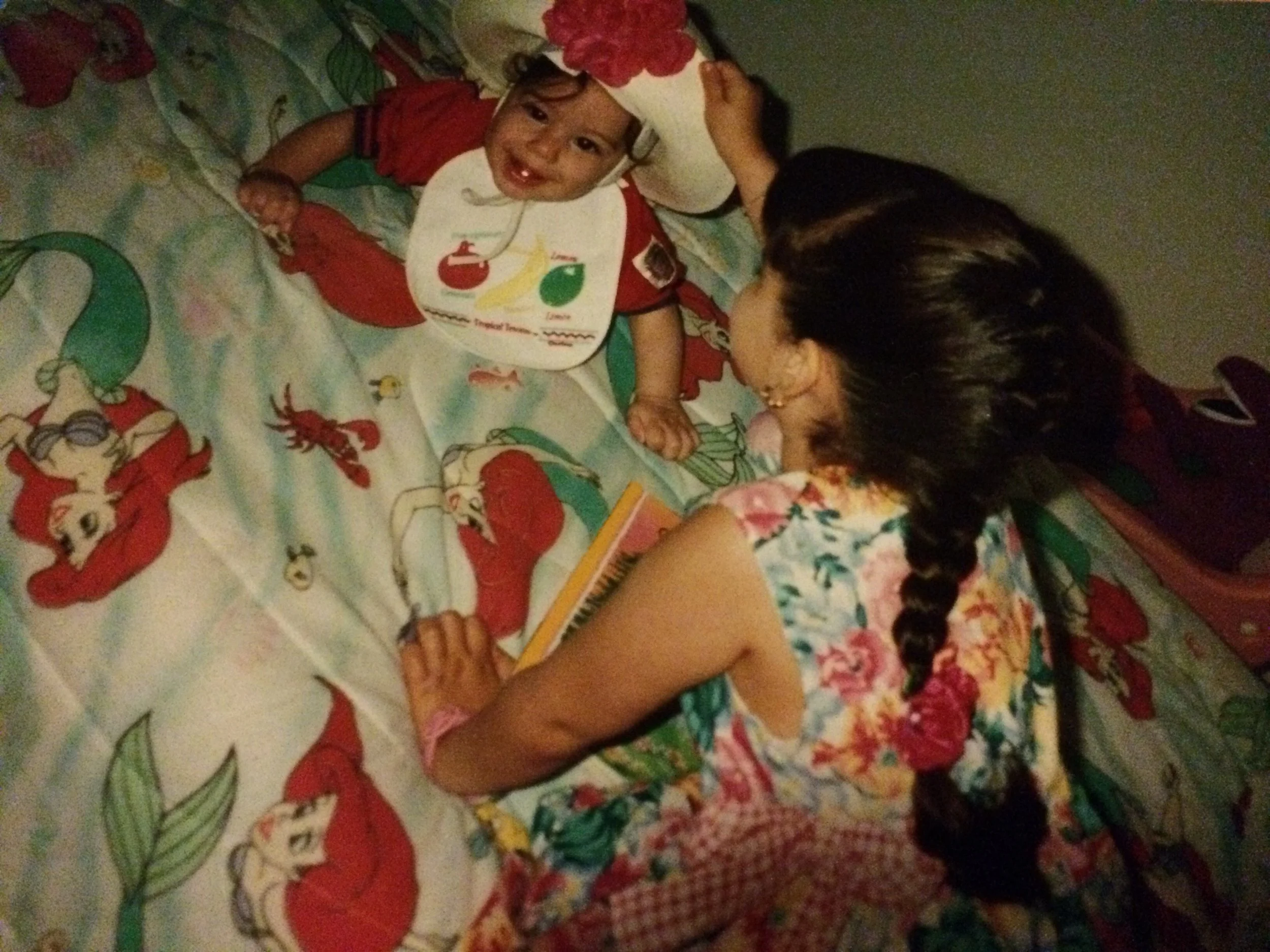
Velazquez with her little brother Steven.
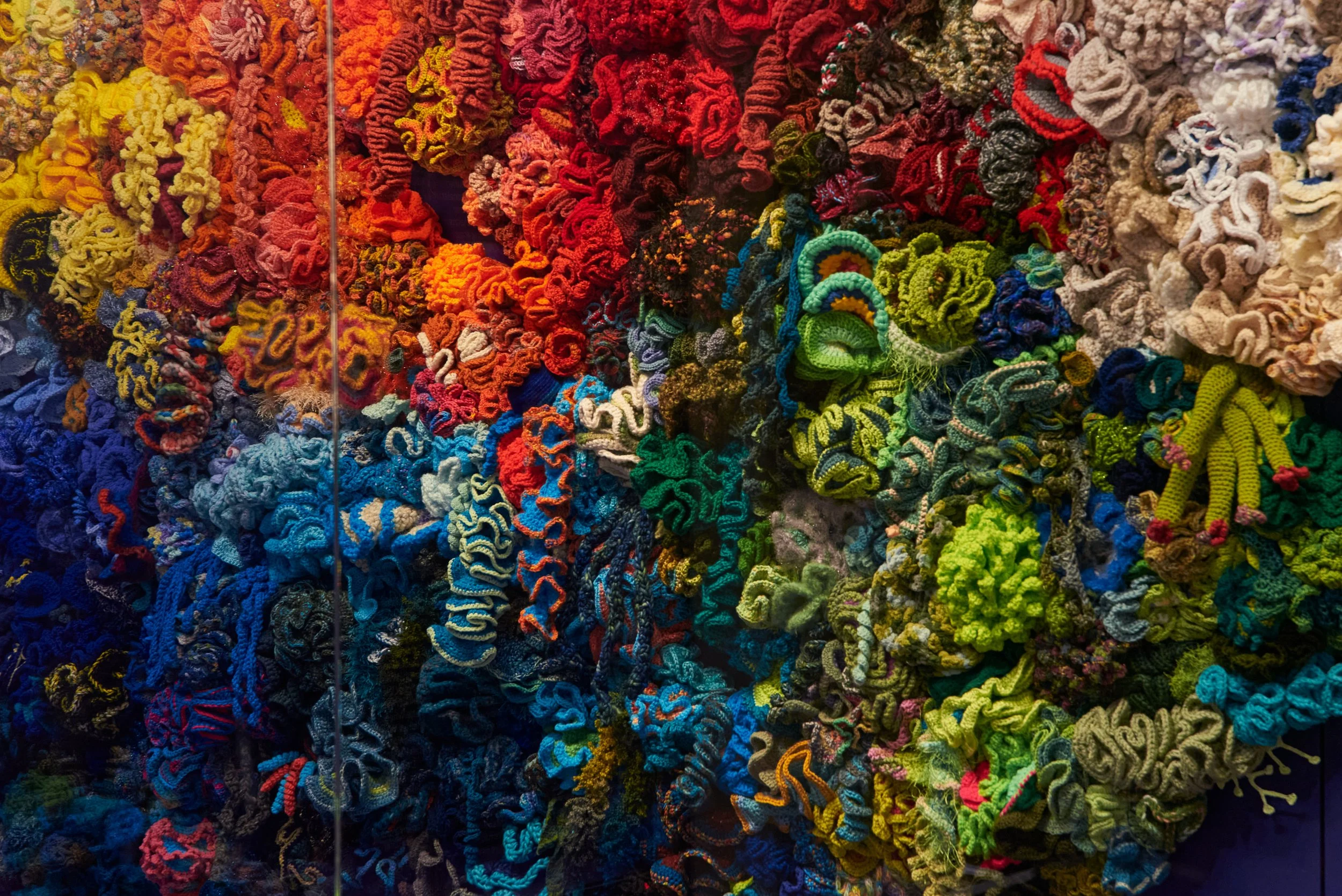
Installation view of Pittsburgh Satellite Reef, part of the worldwide Crochet Coral Reef Project by Christine and Margaret Wertheim and the Institute for Figuring, Carnegie Museum of Art, Pittsburgh. Photo: Sean Eaton
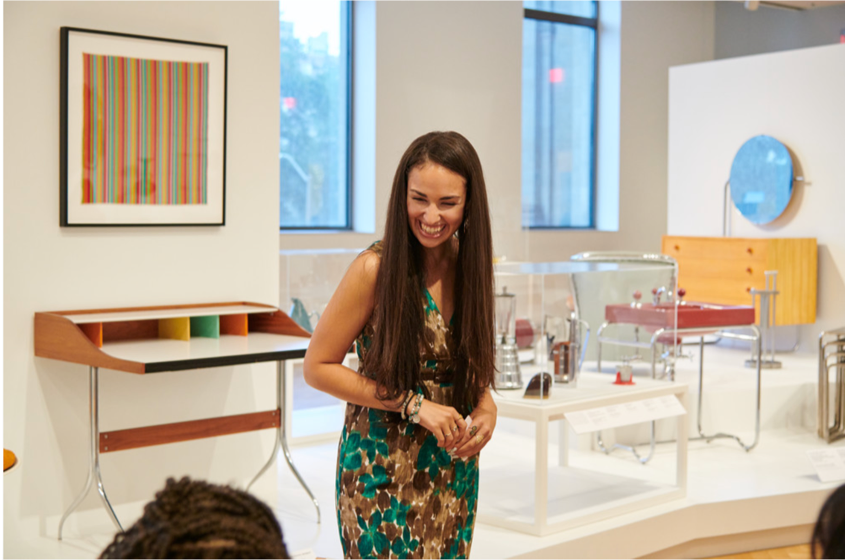
Teacher Residency Program at Carnegie Museum of Art. Photo courtesy of Carnegie Museum of Art
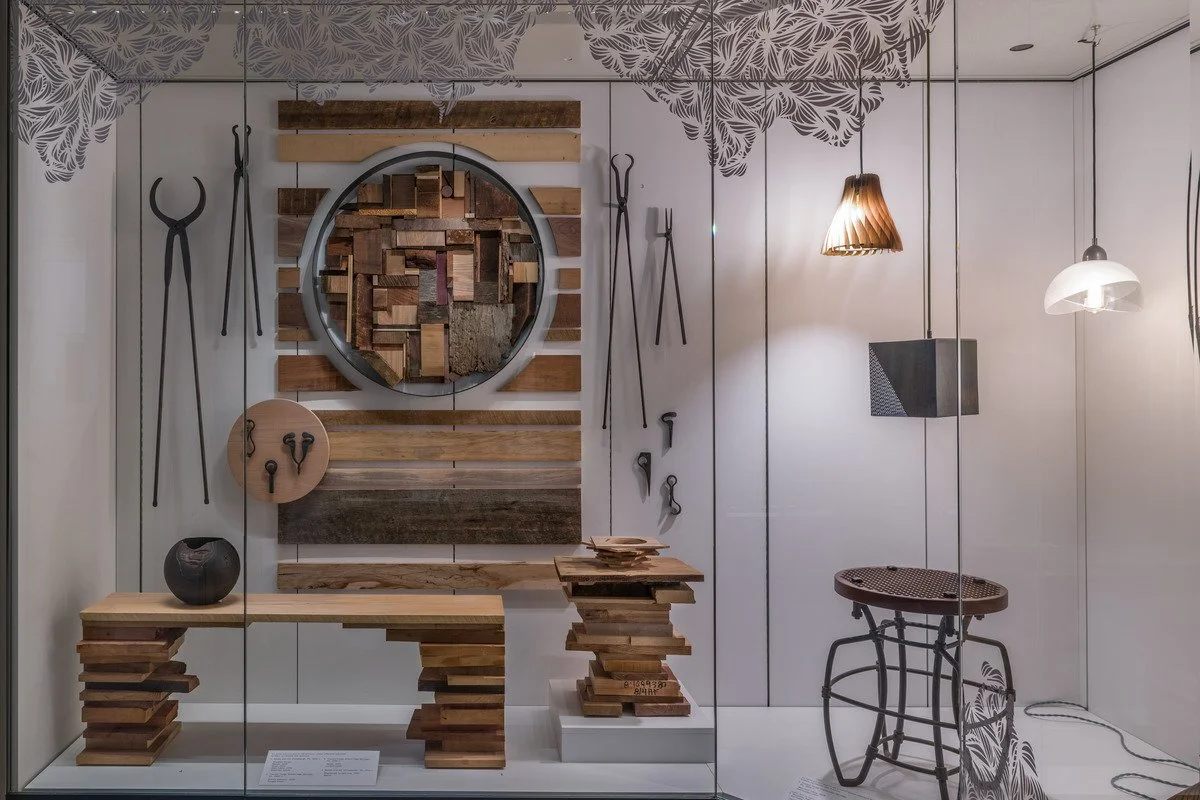
Installation view of Locally Sourced, Carnegie Museum of Art, 2020-2022. Photo: Bryan Conley.
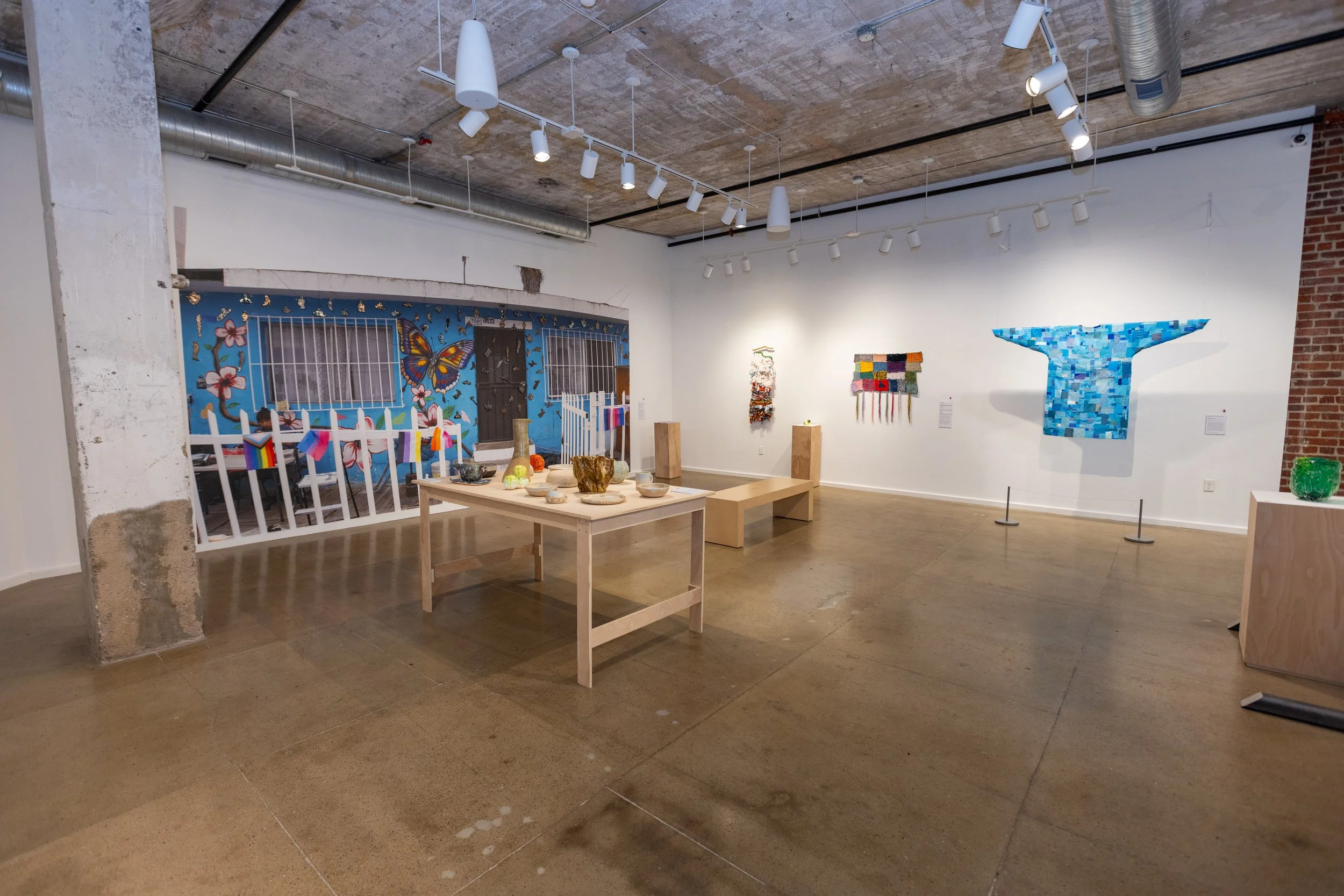
Craft-itarianism installation view, Photo Credit: Emmanuel Figaro

Craft-itarianism AMBOS Project, Queer Milagros installation. Photo Credit: Emmanuel Figaro
Clever is produced and hosted by Amy Devers with editing by Mark Zurawinski, production assistance from Ilana Nevins and Anouchka Stephan, and music by El Ten Eleven.
Keep Listening