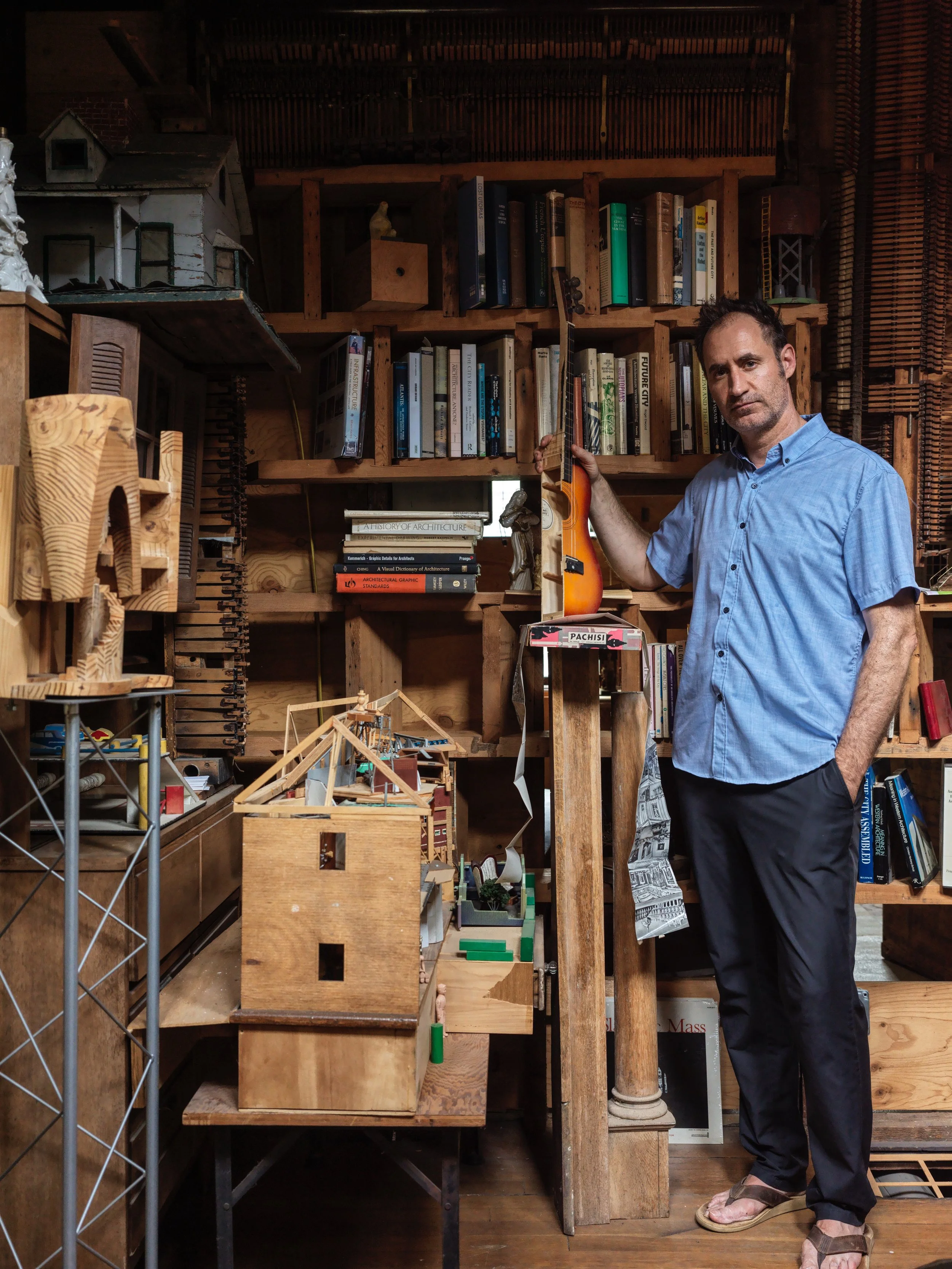
Ep. 1: Joe Doucet
We couldn't be more thrilled that Joe Doucet is our very first guest. This NY-based designer is articulate, incredibly talented, and humble. We loved chatting with him about growing up in a small Texas town, designing from a place of naiveté, and we even found out that he also suffers from the ever-so-common imposter syndrome.
Amy Devers: [00:00:00] Just answer the way that comes outta your mouth. Whatever's most comfortable.
Joe Doucet: Oh God. Are you sure you're gonna ask me to do that?
You do have a bleep button, right?
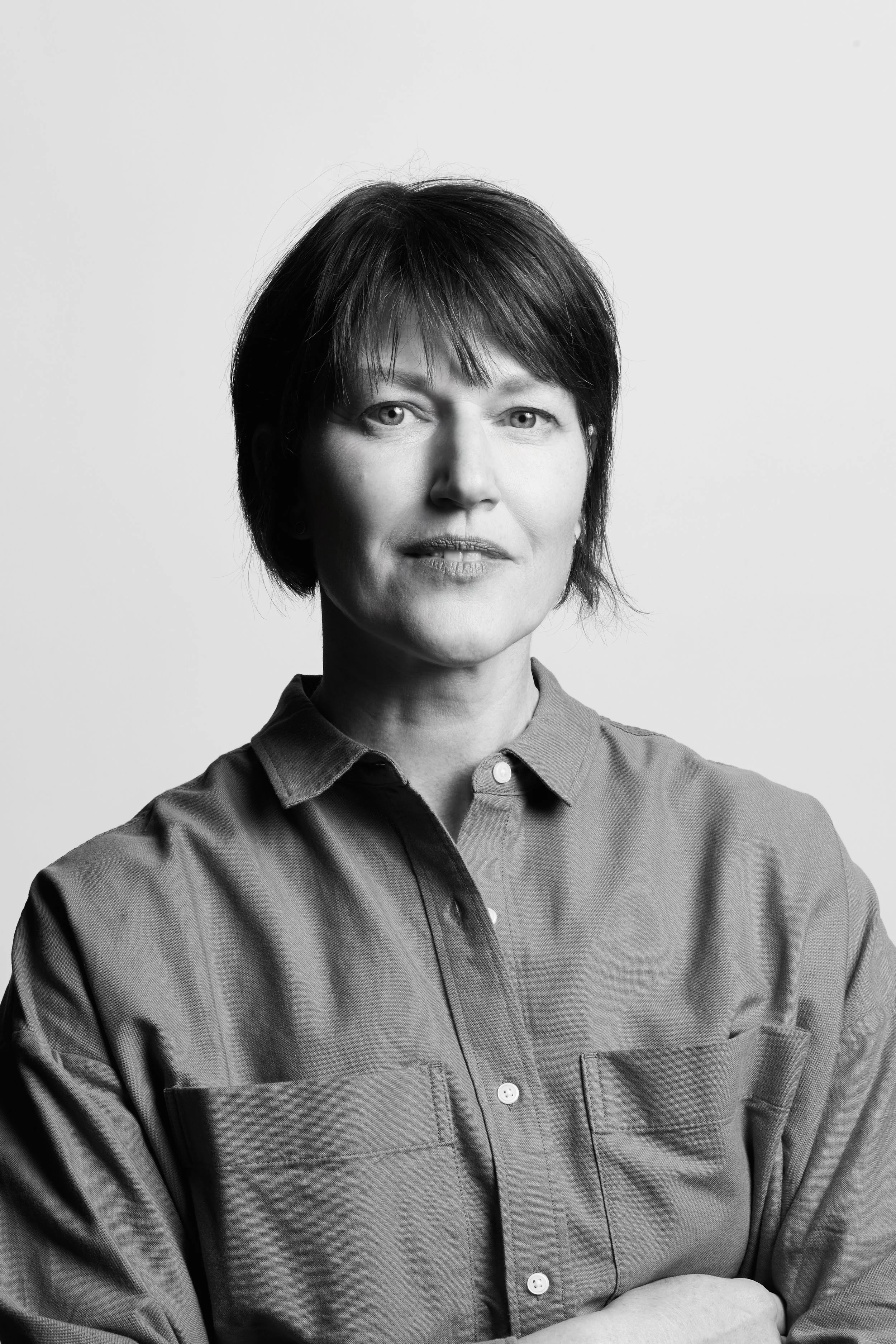
Amy Devers: Hi everyone. I'm Amy Devers. And I'm Jamie Derringer. And this is Clever. Clever is a podcast in which we have conversations with the super smart people who are shaping the world around us through design.
Jaime Derringer: And today we're talking to interdisciplinary designer, Joe Doucet. But before we get into that fascinating conversation that I know you guys are gonna love, since this is our first episode, we wanna tell you a little bit more about who we are, what Clever is, and why we're doing this. So I'm Jamie, the founder and editor of Modern Design Magazine, DesignMilk.com.
Amy Devers: And I'm Amy, a designer maker and TV personality. Jamie and I know each other from the modern design world. In fact, we both live in California, but we actually met in New York City at ICFF several years ago. If you haven't heard of ICFF, it stands for International Contemporary Furniture Fair. It's the main trade show for modern design in the US and the tent pole event for New York Design Week. You'll hear us refer to that a lot.
Jaime Derringer: Yeah. And we kept running into each other at various design events, and it wasn't long before a friendship was formed and then soon after a business relationship.
Amy Devers: Yeah. We're both involved in design media. Right. So it really didn't take long for us to start brainstorming new media projects.
Jaime Derringer: It's a simple premise. It's based on the knowledge that design is universal and that everything, absolutely everything in the built world has been designed by humans.
Amy Devers: So we created Clever to showcase and celebrate those humans designers because we are convinced that having a window into the humanity behind the built world. Connects us all in a more meaningful way to the world around us.
Jaime Derringer: Yeah, that's us and that's why we're doing this, but we're also doing this to have fun.
So speaking of that, we should probably warn you about language. I don't think this episode's too bad, but since this is our first one and you're just getting to know us…
Amy Devers: um, yeah. Well, sometimes we sound more like sailors than polite young ladies. Yeah, we're definitely not gonna edit our guest designers language.
We wanna bring you a full spectrum picture of them, not the buttoned up, polished talking points version you normally get in interviews. So yeah, consider yourself warned.
Jaime Derringer: Design's only about aesthetics. Yeah, no, that's just one piece of it. It's also about problem solving and innovation. I'm really excited that Joe Doucet is our first guest because he totally encompasses just how multifaceted the term designer can be. He's a designer, but he's also an inventor and entrepreneur and a creative director.
Amy Devers: He is a multidisciplinary designer. His portfolio includes products, furniture, consumer electronics, corporate identities, jewelry, fashion, technology, children's toys, environments, oh gosh, and architecture. And he's worked for clients like Bernhardt, BMW, Braun, Hugo Boss, Lexan, Moe, and Chandon, and Target. He's also got a slew of awards to his name. But most recently, he was nominated for a 2016 Cooper Hewitt National Design Award in product design.
Jaime Derringer: And that's kind of a big deal.
Amy Devers: A huge deal.
Jaime Derringer: Yeah. And he's a Texas native, a graduate of Art Center, College of Design, and runs his studio, Joe Doucet Partners out of New York, where he lives with his wife and kids.
Amy Devers: His mantra is everything communic. So how about it, Jamie? Let's communicate with Joe Ducey.
Jaime Derringer: Let's do it.
Hi.
Joe Doucet: Hi, Amy and Jamie. How are you?
Jaime Derringer: Good. How are you?
Joe Doucet: I am very well.
Jaime Derringer: You were born in Texas, correct?
Joe Doucet: I was. I was born in Houston. Uh, my, but I'm of Cajun descent. Uh, my family is from Louisiana. And my father was a construction worker. And at the time, Houston was the fastest growing city, uh, in America. And so my father was there basically to build, uh, buildings or do the iron work on them, uh, for example.
So he relocated to Houston, uh, with my mother, and that is where I was born.
Amy Devers: That's cool. So did you grow up watching these, you know, this enormous construction prob process?
Joe Doucet: Almost the opposite. Actually. We moved, uh, back to Louisiana and then shortly after my parents divorced and I moved back with my mother to Texas. Uh, and we, I grew up in a very small town called Terrell, outside of Dallas, uh, about 30 miles. As a matter of fact, there's. Maybe a thousand people in the entire town. Wow. Uh, and I grew up, uh, we had a little, uh, just a little bit of land [00:05:00] and, um, you know, I grew up running around in the woods and, you know, my nearest, uh, friend I'd say was about three or four miles away. Uh, so I had this sort of, this, this space kind of to myself. Uh, yeah.
Amy Devers: Wow. It sounds like a little bit of a solitary. Childhood. It was just you and your mom and a, in a tiny town?
Joe Doucet: Well, it was, uh, myself and my mom and my sister, uh, yes, in a very tiny town. Uh, as a matter of fact, we didn't live in the town. We lived in the country. Uh, we were about seven miles from the town where the high school was. Um, so when I say grew up in a small town, I mean, there was literally, I had maybe two neighbors within three or four miles.
Jaime Derringer: Wow.
Joe Doucet: It was, it was quite isolating, but. And another way I think, you know, I grew up with a sense of really just, you know, exploring myself.
You know, I was, spent a great deal of time alone, uh, great deal of time, you know, making up stories and, you know, my own adventures and, you know, building things and, and, you know, crafting basically a world around me. It was, it was isolating, but at the same time, you know, it, it, I'm the type of person who is almost most happy when I'm sitting alone.
How things are different with my children, obviously, I have to say I have the, the most fun with them, but, um, I'm, I'm, if there were, there was such a punishment when I was growing up as a timeout. The same way I give my kiss, that would've been the biggest reward I could have gotten. Just go sit by yourself and I don't know, think or draw.
Jaime Derringer: That would have been fantastic. So when you are by yourself and thinking and drawing and building, um, is that kind of what got you interested in design?
Joe Doucet: I mean, in the situation, in the circumstance where I grew up, uh, I'd never even heard of design, uh, almost until I went to college. Uh, I did things that were designed like and didn't really realize they were.
For example, uh, when I was in high school, I used to do the set decorations for the plays or I would do the school t-shirts or I had an ability, a natural ability to draw well, uh, and compose things well. So I was just asked to do all of these things that I real, I didn't realize were actually. Uh, design.
I had a job, an after school job at the only, uh, printer in town, anchor printing, and where I used to help operate the press and do things like this. And we had some customers that would come in and ask for a logo for this new business. Uh, they were creating, they had no capabilities, and I just raised my hand and say, Hey, I'll, if you have a hundred dollars, I'll do a logo for you.
And you know, I really, I started to realize at a certain point that. Well, this is really enjoyable and I'm actually making a little money, you know, doing something that I love. Uh, and so that was really my, I just stumbled upon design, uh, you know, through the opportunities that just naturally arose.
Amy Devers: And so, being naturally good at drawing and making logos, uh, is that what led you to pursue, uh, studying graphic design at Art Center in LA?
Joe Doucet: Well, it, yes, I think so because, you know, I, uh, not really knowing a lot at the time, and, you know, when I moved to LA I decided I wanted to, you know, have, make this into a profession.
Jaime Derringer: Mm-hmm.
Joe Doucet: So I did a little research and it seemed like unless I wanted to move to the East Coast and go to RISD, the best school for that was art center. Uh, you know, it was a terribly expensive school and, you know, I, I had to figure out a way to make enough money to be able to pay for your terms in advance.
So I worked a lot, you know, again, finding clients wherever I could, uh, doing some design work so that I could make up enough money, take that money, pay for a term. Go back, work, make more money, come back and pay for a term. So it took me a very long time to make it through Art Center, actually about six years.
But through that time I had this sort of dual understanding of not only, you know, the academics surround what design means, but actually very practical, real world experience and how you can make a viable living doing this, uh, which gave me a bit of an advantage. Uh, I would say over some of the, uh, just having a purely, uh, academic understanding of what design is. I have understood the commercial reality very early on.
Amy Devers: Yeah. I'll say that's sort of the biggest hurdle of, I think grads who come out of art school is they know a lot about theory and execution, but they don't know anything about client relations or deadlines or real world, you know, budget parameters and stuff like that, so, well, it's kind of amazing you got that dual exposure.
Joe Doucet: Well, it didn't feel amazing at the time.
Amy Devers: I’m sure it didn't.
Joe Doucet: It felt quite burdensome. Uh, but, you know, at the same time, you know, I, I came out with the ability to really tackle a [00:10:00] lot, uh, at the same time, you know, and I never felt the need to deep dive on one project, uh, while I was doing that because design work didn't pay very much at the time, at least someone at my skill level.
My level of experience, I would have to do four or five, six jobs simultaneously in my schoolwork, uh, which was an incredibly rigorous program. And I just, it, it was great training. It made me very, very fast and, and really gave me the ability to multitask, you know, very intense projects. Mm-hmm. Uh, simultaneously and that is something that has served me better than any, any other experience in my life.
Amy Devers: So, so after Art Center, six years at Art Center, going back and forth between LA and Texas or staying in LA consistently?
Joe Doucet: Staying in LA consistently, but you know, going back for family visits.
Amy Devers: Mm-hmm. Sure.
Joe Doucet: When I kept, when I could afford it.
Amy Devers: Okay. And then, what happened after Art Center?
Joe Doucet: Uh, well, uh, immediately after Art Center I was recruited by the ELL group. I had a portfolio that was, it was a bit atypical in the sense that I had fallen in love with product design while I was at, uh, art center. I couldn't major in it. You had to pick one major and go all the way through. There was no multidisciplinary course that you could take at the time. Uh, but so I just explored it on my own and my final project was creating a floating hotel in what, ‘99? Uh, and I did these big beautiful models and did all the, you know, the collateral around it and the identity and what the space would be like and calculated the lift and the, the air flow and, and, you know, really came up with a robust business plan about how this would be viable. And I think it caught, uh, Peter O'Neil's eye in a way that I had this, you know, very different book coming out of Art Center than most, uh, which is one of the criticisms you have in most schools.
All the workbooks the same. And I think mine, mine did it. Uh, and he offered me sort of a dream job. I could come and work in his agency where they did architecture, where they did product design, where they did branding, where they did, um, you know, um, advertising, photography. And I could just float around and work on whatever I found interesting and what a great experience for a first job. It kind of ruined me after that.
Amy Devers: Yeah. Well, I was gonna, I was gonna mention a, a personal story. I had, um, such a delightful experience coming across a piece of yours. It was called Black Box, and I saw it an art show in New York City during one of the design weeks. I think it was around 2011. But basically just for our listeners, this was a small scale smartphone connected printer that prints out your text messages, your conversations on cash register, receipt and duplicate.
And I thought, you know, I recognized that it was a conceptual piece, but it was such. Um, such a beautiful acknowledgement of how our most sentimental and important conversations are kind of becoming a casualty of the tech movement. And I have to tell our listeners, this piece looked like. It didn't look like a project or a student work.
It looked like a manufactured, beautifully designed, um, piece of technological equipment, and I was so moved by it. It struck me in a really, really deep way, and I want to ask you, how is it that you can afford yourself the luxury of creating all this conceptual work? It can't be inexpensive and it's gotta take a lot of brain capacity. And I think that's wonderful. I just hope you can talk about that a little bit.
Joe Doucet: Yeah, no, uh, look, absolutely. Um, you know, and, and thank you for, for actually noticing this piece. It's very innocuous. I mean, unless you actually read or understood the description, it would probably be an item you'd walk by and never glance at twice, and intentionally. So the design language on it was very much focused on what it did and not what it was. Um, to answer the larger question, I, I, I, I basically create a program where every year I develop at least five or six purely conceptual projects that I do not consider about the commercial potential of, you know, I do this quite, um.
It's just, it's training for myself to free myself up from this, this, this, you know, world that I have that I, you know, inhabit every day and really try to, try to just open up and branch out and explore. I tend to put a theme around them, and then I'll do an exhibit of, you know, let's say anywhere from five to 10 projects every year based around that theme. And this was based [00:15:00] around, uh, one of those themes. And that was, uh, the idea of new, an exhibit that I did at, um, at Milk Gallery, uh, with my company at the time that I had founded called Bond. Uh, and this piece was, it was. It was interesting because, you know, I, I just took a different point of view about new, you know, everyone thinks that, you know, technology, it is amazingly liberating, but there are some things we lose from it.
And I remember as a kid, my grandmother opening a box and showing me this correspondence between she and my grandfather during the war. And, you know, even though he was no longer around, you could piece together a relationship. You know, you could build a story out of these artifacts that were left.
And our communication now is so digitally driven. There are no physical artifacts. So I thought there must be a simple way of, of, of, you know, of saving this information, you know, of being able to share it. And I happened to walk into a deli and I had to order something. Register printed out, you know, the receipt, the yellow copy, the white copy of digital information, a very simple device, something that costs, you know, about $50 to make.
And I thought, oh, there's the answer. Like if you just create an interface where you plug in your phone and you can print off, you know, text to text messages to someone from the beginning of your relationship until now, you each get a copy and you have a physical documentation. Of a relationship that, uh, in the event of data loss would, would just completely be eviscerated.
It was just a simple poetic gesture. It was never an object that I thought should be mass produced. It was more an object intended to create questions than to give answers.
Amy Devers: Yeah. And that's how it affected me when I saw it. It was really, really effective.
Jaime Derringer: I kind of feel like you bring a lot of, um, like you were just talking about, you do a couple of conceptual, uh, artistic pieces per year. Where did that all come from? Is that from your childhood? Like you, uh, being alone because I was, uh, an only child for a very long time and I remember kind of making up games and. Just thinking a lot about the world and, and things around me and, and I don't know if you've experienced the same thing being alone a lot. Is that kind of where that comes from? Or, I also, um, I read on Wikipedia that your mom was an artist.
Joe Doucet: It maybe comes from her, you know, I think it comes from a, uh, just a deep curiosity, uh, about things and a deep curiosity also about. Why, what does it mean for me to be a designer? What are these things that I do and what are these things that I've, I'm putting out in the world with my name on it?
And is this ideal? If this is, you know, if this is the last thing I designed, uh, whatever I'm currently working on, am I happy with that? Uh, and I think that the answer is always, uh. You know, not enough. You're not there. There, there's more that you have. Uh, and, and it's an exercise creating these conceptual projects or exercises, you know, just like as if, you know, if you're doing cross training, uh, at the gym, you know, you, you do something different to strengthen the rest of you. And I find conceptual projects fantastic for that. Uh, if it were all I did, I think I would, there's a. There's a bit of a narcissism to it to be honest.
Amy Devers: Yeah. I get that.
Joe Doucet: If I only expressed what's in my mind and felt the world should, should, you know, should fall in love with these things. It's a bit narcissistic for me. I'm not, uh, an artist in that sense. Uh, however, I feel that if I didn't take the time, the energy and the effort and the, the, the mental capacity to be able to do these projects, you know, running and ongoing all the time, uh, you know, I would miss such an opportunity for, for growth.
Jaime Derringer: That's an interesting analogy with the cross training. I mean, you, uh, I suppose you have to be a bit narcissistic, um, in terms of, of being a designer. Um, I'm a designer.
Joe Doucet: We all are narcissists.
Jaime Derringer: Yeah. Yeah. Well, that's true, but it's part of that brain training because you are the one who has to come up with the design. So in the time when you're not creating those designs, you still have to be actively mentally thinking about things. Um, so I think that's a great analogy. Yeah. You've gotta keep your core your, you've gotta stay creatively juiced, right?
Joe Doucet: Uh, yeah. Absolutely. You know, I'm not the most talented, you know, I'm not the brightest, I'm not the most savvy. I am one of the hardest working, you know, that's one of the things I have, and I put that work back [00:20:00] on myself. Um, constantly about improving what I do, the quality of what I do, the, the clearness of the language that I use in design, and always, always obsessively looking towards, uh, what's next.
Amy Devers: If you were a rock star, let's say, there would be a certain number of your products or projects that would be considered your greatest hits. And by greatest hits, I mean most commercially accessible and popular.
Joe Doucet: I see. Yes.
Amy Devers: Um, what do you think those would be for you?
Joe Doucet: Well, I have to say, uh, in terms of response, uh, to the work that I've put out there, um, and not in, in any type of ascending order, but as the order they come to me, uh, I did this, uh, flat pack table, um, called uh.
W oh one, uh, nickname screw top, and it had this giant assembly that was very visible, uh, and you know, very, completely machined at a solid bronze. I mean, this table cost a fortune for me to make. But it was, it was meant as a, um, as thinking about that flat pack furniture at the time and how, you know, delivery and the supply chain has such an impact on the environment and, and, you know, rather than take the idea of self-assembly and making it cheap. A cost saving device, you know, making people very well aware that this is something that has an impact, uh, on the environment and around them. So I wanted to create this beautifully elegant, incredibly robust heirloom quality piece. Uh, that, um, you know, that would raise these questions in people's minds and I, and it got a great deal of exposure, uh, both positive and negative. You know, I, I remember fast company writing, uh, I think their headline was Take that Ikea $20,000 flat pack table. And it was, it was intentionally expensive because the quality of materials I had to have made in Germany, by the way, uh, it was incredibly expensive.
Um.We actually sold quite a few. I sold it through our gallery and I was very surprised. I'm like, who's paid 20,000 for a table? It's just a, it's a statement piece, but, uh, you know, I mean, they're, they're beautifully done. Uh, and I think, hopefully they remain in people's lives and they're not sitting on the corner like an IKEA table would be.
Amy Devers: Right.
Joe Doucet: Uh, but that piece surprised me. Uh, and I think it was, you know, sort of audacious. Uh, and that's possibly why. Another piece I did was these, um. These headphones, uh, one sense I called it. Uh, and that was a a, that was on a conceptual line of thinking around time. That was one exhibit I called it on time.
One of the things is how do you slow down time? That was one of the intellectuals that I followed and pursued. Uh, and that led to this project. And that really became, you know, about this, you know, creating a sense of complete immersion where you isolate yourself from all of your senses, as many as possible.
So I created this set of noise canceling headphones that had a visor that blocked your face. And that, you know, you would just completely, uh, sub submerge yourself in one, in almost every sense away from, you know, apart from you. Uh, and, but in order to, when you have these things on, you can't see or hear anymore.
So I wanted to create a visual message that you are intentionally isolating yourself and you don't want to be disturbed. So I put these, uh, spikes all over the visor and did a shock red, high gloss shock red. Uh, and you know, it created a very striking visual, I think, uh, it was very graphic in, in its, uh, in its imaging.
And this went everywhere. I mean, this went on… Once things get on, once things get, it gets sort of in that world. They take their own, uh, their, their own life. And this, this was, you know, one of the, had had. Really the most wide distribution outside of, you know, design with a capital D, if anything that I've done.
Amy Devers: Cool. Okay, so part B of this question is if those are your greatest hits, what are the B sides that you privately consider to be your greatest successes as a designer?
Joe Doucet: You know, there, there are little things and hidden things. Um, for example, I did a project, uh, many years ago, and it was a, uh, it started off as a, as making the most of a derelict space of a, of a city block in New York.
It was an open question posed to me by someone who thought they could, you know, I might wanna, we might want to develop something here that's not just a building. What would you do? Uh, and so I naturally thought of green space, but I thought, you know, that this space should actually give something back to the city [00:25:00] beyond just another park. You know, it should be a park plus something else.
Amy Devers: Mm-hmm.
Joe Doucet: And I thought, well, should, maybe it should generate its own energy. And that led me to, uh, a deep study on, you know, what are renewable sources of energy? And the only thing that seemed to make sense at the time that was there at the point of viability was, uh, was the wind turbines and the megawatt region. Massive wind turbines. Well, there are two problems with those. One is that they have to be faced against prevailing wind, which means they operate at peak efficiency 30% of the time. Okay. Which is incredibly wasteful. And, and secondly, they're just ugly as hell.
Amy Devers: Mm-hmm.
Joe Doucet: I mean, this is why people try to push some way out into the ocean. No one wants to look at them. So I thought, can we solve both of these problems at once? And this is where this, uh, double twined, uh, sculptural wind turbine that we had to bring in a lot of engineering help on, uh, came about. And it is a, you know, a beautiful sculptural form that is far more efficient than any wind turbine currently, uh, in place.
Now see, that's not the interesting part of it, but the interesting part of it is how. I saw for a wind for resistance in the spinning blades, and that was to incorporate wind. I mean, the turbines generate their own electricity uhhuh. So I incorporated magnetic levitation as opposed to mechanical ball bearings, uh, so that a child could spin this thing.
And, you know, magnetic levitation allows us to break at certain speeds, so you know, you don't damage the piece. Secondly, I put the generator at the bottom, not at the top, so it could be serviced. By someone walking into a room as opposed to getting these giant cranes out and you know, it just seems insane to me.
Amy Devers: Yeah.
Joe Doucet: So those two innovations are what was really important and impactful and some of the patents for that were purchased and are making their way into helping, you know, create a new generation of winter turbine.
Amy Devers: That is so exciting. Incredible.
Joe Doucet: Yeah. So those types of things, it is the, it are those little subtle things. You could look at the shape and the form and say, yes, okay, that's really interesting. But when you dig into problems and the further you dig in, you realize so many things just have only been considered on the surface. They're very simple things you can do to improve, you know, the, the, the environment, the quality of life and, and, you know, bring design up from this aesthetic pursuit to this to something a profession worthy of existing.
Amy Devers: Yeah. Hot Damn. That's a good quote.
Joe Doucet: Oh wow.
Amy Devers: Okay. So you've made it clear that you work in so many disciplines. How is it that your creative process. It's flexible enough to work in all those different disciplines. Is there anything constant that holds it all together? Is there a way of working that you apply to every project? Can you talk about that?
Joe Doucet: Yes, I can. And the answer to that is yes and no. Um, I think the reason why, uh, we we're, we work across so many, uh, different projects is that I have an almost debilitating sense of curiosity. Uh, and almost a reckless sense of the ability that we can pull something off. I love getting into areas that I know absolutely nothing about because I think that's where innovation comes from. I think that when you become a deep expert, you have answers.
Amy Devers: Mm-hmm.
Joe Doucet: And answers come from experience and an understanding of the way things are done, and that is not where innovation comes from innovation comes from curiosity. It comes from tinkering. It comes from questioning what has come before, and it comes from naivete, to be honest.
Amy Devers: Mm-hmm.
Joe Doucet: And I'm full of the latter in most categories. So, I love when an opportunity presents itself. And, uh, I get frightened. I am tense and nervous to say yes. Um, nothing like fear is a motivator because, because I just, I realize I have no idea how to do this. No idea where to even start. And that's a wonderful place, uh, to begin something. My education was in communication, so I was trying to create ideas and, and make them intellectually defensible and rationalize each and every decision. Mm-hmm. Uh, you know, making, arguing a point rather than creating, you know, a, a, a physical manifestation of something. So I never begin a project by sketching, I sketch like shit. I mean, my, just, it's terrible. My sketches are there [00:30:00] to communicate ideas to myself.
I begin, uh, writing. Actually, I begin by writing out a sentence or two and trying to create a very clear understanding of what I want this product to do, what I want it to be, what I want people to feel, what I want people to think. Um, who should it relate to? Uhhuh. And then you just use the tools of design to shape that.
I'm not aesthetically driven. I'm not a stylist. Uh, it's sort of the way something looks is almost the last thing I developed. It's all quite intentional. It's all quite about, you know, being clear and that's, you know, and, and as a result that, you know, I'm, I'm often called a, a minimalist. My work is called being, in fact, you know, I'm not a minimalist. I'm just lazy.
Amy Devers: You just got done saying you were one of the hardest working ones in the professional.
Jaime Derringer: I'm totally making a t-shirt of that. I'm not a minimalist, I'm just lazy.
Joe Doucet: Yeah. By that what I mean is that I don't wanna put all the hard work in now trying to make this beautiful. I just want that to be as clear as possible and do as little work on my part and the user's part to understand what this thing is. So that's, so yes, it might come across as being minimal. Um, and it's exterior, but I, I don't think so. And it's in, in the interior and the concept, and then what, uh, what the object ultimately does.
Amy Devers: Well, clear communication is. Uh, so important and so hard for some people, but it is-
Joe Doucet: incredibly difficult.
Amy Devers: Yeah.
Jaime Derringer: So, I wanna ask you, you've been to design school, you've worked with many wonderful designers. I'm sure you've had, um, people over the years give you advice about design. What's the best advice anyone ever gave you?
Joe Doucet: The best advice I've ever gotten is make sure you get paid 50% in advance. If someone's not going to pay you a deposit, they're not going to pay you, and I found that to be true. And if I were to give advice to anyone about design, it wouldn't be about aesthetics. It wouldn't be about, you know, trying to follow your passion. It would be about getting a deposit.
Amy Devers: I like that. And it's so true. It speaks so much to like what kind of client they're gonna be and whether you're gonna be able to sustain yourself as a designer.
Joe Doucet: Absolutely. If you don't understand that design is a business. Uh, you should really look into doing something else, uh, because it's the only people who succeed.
And I've seen so many people fall by the wayside over the years who had such promising careers. And, you know, the, the, the longevity that comes, it's not from talent, it's not from experience. It's not from being incredibly charming with, you know, potential manufacturers. It's about having a very good business sense.
And unless I get an understanding that you absolutely need to develop this and you're willing to put in the hard work. And it's very hard work to educate yourself on how all those works. Um, you should really choose another career because it is a very difficult career to make a living at and a, and a and much more so to do very well. And the people who do very well are very good business people.
Amy Devers: Good wisdom. Thank you for sharing that. So you've mentioned a little bit about your fear and your naivete, but almost as though they're strengths, but there's gotta be an Achilles heel or a weakness or an insecurity that you have to overcome regularly. Everybody's got 'em professional or otherwise. What's yours and how have you learned to keep it in check?
Joe Doucet: Oh my God. I have my fear in my, my, my, my Achilles heel or legion, really. I'm very impatient, uh, with things outside of my control.
Amy Devers: Mm-hmm.
Joe Doucet: And I try to come across as being incredibly patient. And, you know, I have this phrase be a duck on water. You know, where you're floating above the surface and your feet are paddling like mad underneath it. Hmm. Uh, and I always try to pull that off as a point of composure. Uh, but yeah, I'm, I'm incredibly impatient. I constantly, uh, feel like an imposter, you know, I find myself in, you know, in certain situations where, you know, you're being celebrated for one reason or another.
And I always feel like, well, you know, why me? There's, you know, I'm, I'm just. Goofing around most of the time. I mean, I have a lot of, I have a, uh, you know, I, I try very hard. Uh, you know, there's so many talented people out there who don't get a moment, you know, whose work has never seen or exposed and who, you know, these designers, designers, you know, the people that we respect and we admire.
Jaime Derringer: Mm-hmm.
Joe Doucet: Uh, and, you know, it seems kind of unfair sometimes. Um, you know, and, uh, uh, you know, [00:35:00] I have a lot of. A lot of Achilles heels. Actually. Maybe we could conference in my wife.
Jaime Derringer: Yeah. Well, that leads me to the next question is what's your guilty pleasure? Is there a TV show you watch? Is there a snack food that you have to be eating? Do you wear socks with sandals? I don't know. Maybe we should call your wife.
Joe Doucet: Yeah, maybe we should. But uh. You know, I have my nanny and I both have this obsession over the walking dead.The first thing I come home, we just sit and talk about it for like 20 minutes and it drives my wife nuts, you know, she's like, what? You do something, you know, much more, more deeply, uh, intellectual pursuit and, but Walking Dead, come on. It's amazing.
Amy Devers: But you're deeply intellectual. Pursuit is what you do at work. You've gotta have some downtime.
Joe Doucet: I'm telling you, maybe I should start fighting zombies at work, watching more PBS.
Amy Devers: Okay. You've mentioned a wife, kids, and a nanny. What's your off-duty home life like?
Joe Doucet: I'm almost militaristic in my schedule. I'm up at 5:45, 5:50 if I'm sleeping in, uh, I get a lot done before anyone's up. I get the kids, I get 'em off to school. I am at the office 8:15.
I work, leave for an hour for the gym at 3:00 PM because it is the most efficient time. There's no one there. I come back, I get a couple more hours work done. I'm home at exactly 6:30. Do we need the nanny? On most days, uh, you know, I'm there with the kids. They go down at 8. I tend to do a little bit of work from 8 to 9, a little bit of thinking, writing, uh, you know, spend a little time with my wife and, you know, and,and bed by 11.
And it's like that every day. I never run off, if people are still here working at 7, 7:30, or if they ever come in on a weekend, that's a failure on my part and a failure on their part to manage their time. I believe strongly work life, life balance. And I get angry when we have to work a weekend. Uh, usually at myself. That means I plan something poorly.
Jaime Derringer: Oh, nobody should work weekends.
Joe Doucet: I almost never work weekends. Almost never. There are exceptions to everything but as a policy, we do not work weekends.
Jaime Derringer: So, you are in the process of launching a new brand called other.
Joe Doucet: Yes.
Jaime Derringer: Very exciting. And you're launching with Dean DeSimone, who is from Tokyo Bike.
Joe Doucet: That's correct.
Jaime Derringer: Do you want to talk a little bit about how that came about? What sparked the idea and how you met up with Dean?
Joe Doucet: Sure, certainly. Um, this idea, I'll, I'll, I'll give you a brief synopsis of what other is. We are creating a product brand, and we are doing it as if it is a internet startup, right? We are creating a line of homewares where I brought together literally the world's best designers, uh, to create objects exclusively for us. And everything is made with the latest advances in technology, 3D printing, steel porcelain, 3D knitting, uh, on demand textiles. And the reason why we're doing that and the reason why we're using this technology is that it allows us to bring these products in the world with, with almost no environmental impact.
In other words, we made it only when someone buys one, you know, we don't have to cut tooling in China and put chip 10,000 units on a, on a boat halfway around the road and sitting in a warehouse. I hope that someone buys them. These objects don't exist until you purchase them, which is and, and made, and really the cleanest form of manufacturer, every device by man.
We felt that this would, this is a really interesting use of these emerging technologies and really transformative to this industry, which is massive. Um, how this came about, I'll tell you, I was, um, I was working at a cutlery set about three years ago. And like everyone, you know, I ordered 3D prints just to test the feel and the hand and size and scale. And a new material was out 3D printing in steel. And I thought I'd give it a shot, you know, so I ordered this fork. It was like $250 and it was really incredibly shitty. It was very res and looked horrible. Uh, but it was a fork. I mean, you could use it, you could throw it in the dishwasher, you could use it.
I still have it. And it occurred to me, very clearly [00:40:00] something that I had long suspected is that in the future as a designer, you are either going to be a maker, which I have the utmost respect for, and we have several working with us on other, or you're gonna be a creator of intellectual property. The small level manufacturer is going to be eviscerated. It's either gonna be craftsmen or robots. And since I'm not a craftsman, I opted to pioneer the robots.
Amy Devers: That's so exciting.
Joe Doucet: It's an ambitious project. I went out and raised venture capital to do this, and I brought in partners first, two partners that I should speak of.
There's Dean DeSimone, and as a co-founder in the CMO of the company. and I brought in Evan Klay, who was also now co-founder, and he is our head of product. And he works with the designers and the manufacturer to optimize these designs for, you know, being realized in the technologies that we're using.
And we're a team now, we're seven, we're launching May 11th. We're doing this launch at the Sky Lounge at the New Museum. We will be live, Ecomms platform developed by Gin Lane, launching on the same day and honestly, we couldn't be more excited. This is one of the most fulfilling things outside of my family that I've ever done.
Amy Devers: Wow. It sounds, yeah, it sounds amazing. And we wish you the best of luck with that.
Jaime Derringer: Oh, I can't wait. I'm really looking forward to seeing the collection.
Amy Devers: Yes.
Joe Doucet: Well, you should see what's coming out after as well. It's really each and every week that launches, I think we're doing launch every two weeks. We have some very exciting designers doing things, which, uh, just astound me.
Amy Devers: Okay. So for our listeners, as of May 11th, they can go to othr.com to find it?
Joe Doucet: Yes.
Amy Devers: Okay. Fantastic. So we thought it would be super fun to play with you, uh, sort of. Silly game called conceptual invention. Are you game for something like this?
Joe Doucet: You know, I will do my best.
Amy Devers: We're gonna give you a problem and we're gonna give you a few key materials that you can work with, and you're gonna sort of put that in the old data bank there and turn it around and then give us a solution in the form of a Joe Doucet brand conceptual invention.
Joe Doucet: Okay, do I have like three weeks or –
Amy Devers: Okay, so there's a long time married couple and there's a lapse in their communication. They've stopped communicating and their marriage is suffering. That's the problem.
Joe Doucet: Alright.
Amy Devers: Here are the materials you can work with. Bread and or vitamins.
Joe Doucet: And or vitamins. I kinda like being forced to use both. Okay. And vitamins. Okay. So lack of communication. Okay. So the vitamins come in because they obviously wanna show that they care about each other and their health and longevity and what's been the rest of their life together. So every morning each one takes a set amount of vitamins and pushes little messages into.
The piece of bread, they have to leave little notes to each other, and then eat these bitter vitamin peels. So it's kind of this beautiful symbology around marriage, the carrying the health and ever so of slight bitterness every morning.
Jaime Derringer: That's fantastic. It sounds pretty accurate. Yeah.
Joe Doucet: Alright.
Jaime Derringer: Alright. Your next problem is a young, urban professional male suffers from debilitating hypochondria and your materials are beeswax and or a space heater.
Joe Doucet: Okay, hypochondria and bee wax. Okay. Um, I get it. Uh, so what we do is we take the bees wax and set it, uh, in front of the space heater. Um, for, let's say a good three, four weeks, the beeswax starts to, um, obviously in this liquid form, it starts to congeal. It gets moldy, it starts to degrade, and then he is then forced to eat it. And as a result, he gets very sick. So if he is no longer a hypochondriac, he's actually sick.
Jaime Derringer: Oh, I like where you went with that. It's a little diabolical. It's a little dark.
Joe Doucet: I just, I just went to solve the problem.
Amy Devers: Yeah, yeah. No, you did -
Joe Doucet: with great efficiency, I think.
Amy Devers: Yeah. Okay. So we know that you are looking forward to the launch of othr. May 11th.Are there any other ventures or products or projects you have coming out that you wanna plug [00:45:00] before we take off?
Joe Doucet: During Design Week in May, I've designed an installation for Corian, a giant I think 36 foot bar ghat'll be a place so you can go have a drink. Also, the Sake brand that I am one of the owners of will be serving there. All through Design week.
Amy Devers: Design week in New York City.
Joe Doucet: In New York City. Yes. Um, as well as very interesting, uh, take on an expanding table for modern homes where you can, you know, when it's a few people or when it's many that has built in storage, a very novel solution. Actually, I don't typically like to design furniture, but this was a great project.
In addition to that, just finished actually and we're about to launch in terms of press, uh, this new office type seating for, uh, scan Deform, which is a, uh, a Swedish, uh, design company. Uh, and it is, um, going to be quite,you know, it's really rethinking what a new office could be. And it has integrated lighting, integrated tables, and integrated power, uh, and actually quite a beautiful simple form that allows you to create your own space. And we're developed an app that's going to help you sleep better.
Amy Devers: Oh my God.
Jaime Derringer: Ooh, that sounds cool.
Amy Devers: That sounds like, um, yeah, there's a lot going on in that brain of yours. Thank you so much for spilling it all out for us. Um, we wanna make sure our listeners can find you. Uh, can you tell us what your website and social media handles are?
Joe Doucet: My website is www.joedoucet.com, and actually on all my social media is just at Joe Doucet.
Amy Devers: Awesome. Thank you so much. Thank you for sharing all that intel and wisdom and your personal stories. I feel like I know you well. I can't wait to see you at Design Week.
Joe Doucet: All right. Fantastic. Okay, we'll see you soon.
Amy Devers: Okay. Thanks. Bye.
Joe Doucet: Cheers.
Amy Devers: Bye. He's so fascinating.
Jaime Derringer: Mm-hmm.
Amy Devers: I love the fact that he makes himself do conceptual projects as part of his like, sort of mental CrossFit-
Jaime Derringer: I know
Amy Devers: It must take such discipline to do it, but he's absolutely right. That's how you keep your brain working.
Jaime Derringer: Mm-hmm. On off hours. Just keep it creative and keep the juices flowing. And I also love that he keeps almost a military schedule, uh, to maintain a life work balance, which is so important.
Amy Devers: It's so important., I can't do the military schedule though. I, it takes such discipline and I'm so impressed. I, I don't know what it takes to do it, but -
Jaime Derringer: I don't know. I can't do it. I would like to do it, but it just never seems to work out for me.
Amy Devers: I also was really impressed by his thoughts on curiosity. Being a naivete, being the drivers of innovation. And I totally agree with that. I think one of the things that I've always resisted in my career is they try and call me an expert, like a lifestyle expert or a home improvement expert. And I'm like, I don't know shit. I am just curious about a lot of stuff. But I never felt comfortable with the term expert because it feels like a lock. And he's absolutely right. Like. It's having questions about things and not being an expert that leads you to asking like the really obvious questions that the experts are overlooking because they're so mired in all the historical wisdom and documentation and studying they've been doing on the subject.
Jaime Derringer: And I think, you know, one of the things I say about artwork is I never went to art school, but I draw and paint for fun. But what I think is so great about never having painted with paints before and, and not going to school to learn how to properly mix paints and, and use paintbrushes and all that stuff, is that there's more room for experimentation.
And, when you're approaching a medium or something for the first time. There's this sense of of, of being a rookie that's actually useful in, in the, in the creative process. Um, because you really can't see the end result and you can't really see the process. You're just gonna go through it blindly.
Amy Devers: Yeah.
Jaime Derringer: And that makes things so much fresher in my opinion.
Amy Devers: I think part and parcel of that is that imposter feeling that he also talked about is like, if you're gonna feel like a rookie when you start, there's no way you're gonna feel worthy of an award when somebody tries to recognize you for it, you're gonna feel like a fraud. Like, Hey, I didn't know what I was doing when I started this and you're giving me an award for it. Um, but I think we all have to, I mean, I think imposter syndrome is something that everyone suffers from. Absolutely. That's not unique to designers or, or anything.
Jaime Derringer: Yeah. I think so, too.
Amy Devers: I think if we're gonna embrace curiosity in naivete, then we have to learn to keep the imposter syndrome in check. That's what I take away from this. [00:50:00] Well, we hope that you guys enjoyed our talk with Joe Doucet as much as we did. And if you like this, could you do us a huge favor and subscribe on iTunes or wherever you get your podcasts.
Jaime Derringer: and rate us on iTunes.
Amy Devers: Ooh, yeah. We need that rating. And, uh, if you wanna find out more about Joe, we'll have a bunch of information and images and stuff in our show notes at cleverpodcast.com.
Jaime Derringer: And be sure to follow us on Twitter at Clever Podcast. We are also on Facebook and Instagram and where else are we, Amy?
Amy Devers: We are all over the place. We need support. So subscribe. Follow us on social media, sign up for our newsletter, and we wanna give a shout out to Chris Mole of your studios. He edited this episode and he's awesome. The music you heard was from El Ten Eleven. You can find more from them at their website. E-L-T-E-N-E-L-E-V-E n.com. And thanks to Jenny Rais for our branding. And mostly thanks to you guys. Thanks for listening, episode number one. Thanks for listening. In the can, Jamie Derringer. High five. High Five.

It's clear that he's earned his nomination for a Cooper-Hewitt design award this year, designing everything from a luxurious flat-pack table to virtual reality eyewear to a deck of minimalist cards. We even found out about designs we'd never known about before, such as his redesign of the wind turbine, called Airate.

Left: One Sense / Right: Airate
We learned that he "cross-trains" his brain by doing conceptual design in between commercial projects, and that he approaches design with naiveté:
“Innovation comes from curiosity, it comes from tinkering, it comes from questioning what has come before, and it comes from naivete to be honest.”
Joe talks to us about why he decided to launch a new brand called OTHR. OTHR will bring to market made-to-order beautiful objects designed by some of the biggest names in design (trust us - we've seen the list - it's impressive!), with new designs launching bi-weekly. All of the items will be made using on-demand technology. We can't wait to see the collection!
Learn more about Joe Doucet on his website: JoeDoucet.com
Follow Joe on social media:
Twitter: @joedoucet
Instagram: @joedoucet
Read about his work on Design Milk here.
Learn more about OTHR on othr.com.
If you want more Clever, sign up for the newsletter to get notified of new episodes as they are released. Follow us on Facebook, Twitter and Instagram. And most importantly, please spread the word to anyone who you think would dig it.
Subscribe on iTunes, Stitcher, Google Play, SoundCloud, or subscribe using our feed: http://clever.libsyn.com/rss via your favorite podcast app. And please, if you like us, give us a rating!
Special thanks to Chris Modl of Yore Studio for editing this episode.
Music in this episode courtesy of El Ten Eleven—hear more on Bandcamp.
Shoutout to Jenny Rask for designing the Clever logo.
Keep Listening